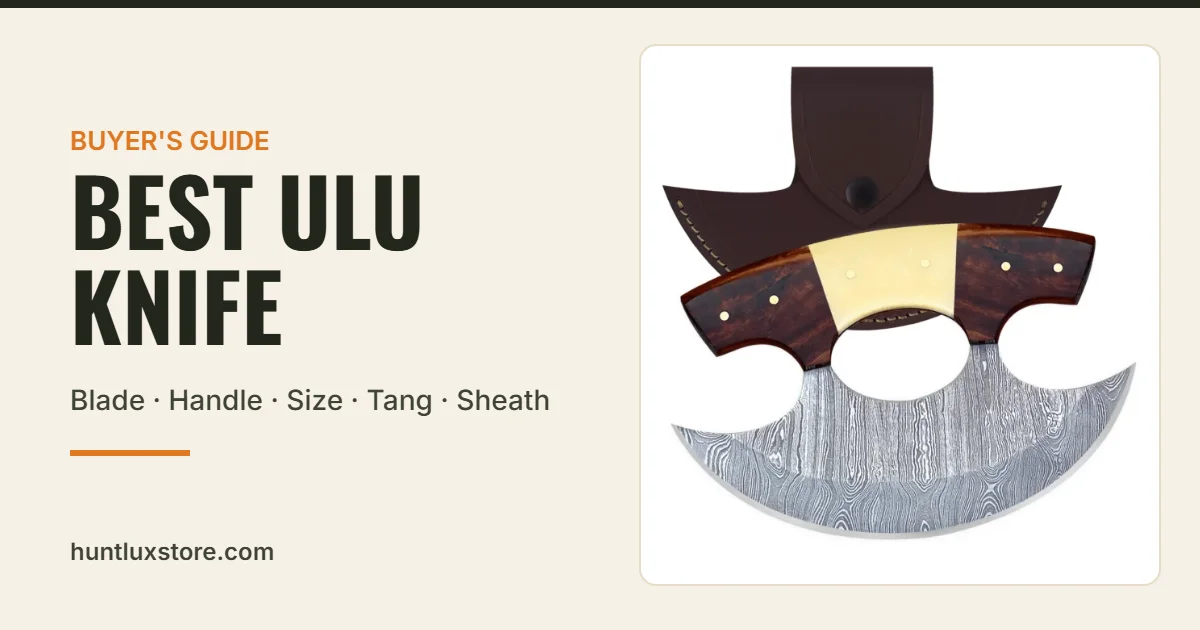
What Is the Best Ulu Knife? A Straight Answer
The best ulu knife is one with a sharp, well-balanced curved blade, a comfortable handle that fits your grip, and a full-tang or secure construction that won’t loosen over time. For most home cooks, a 5- to 7-inch Damascus steel ulu with a hardwood or resin handle hits the sweet spot between performance, durability, and looks. Below, we break down everything you need to know before buying — blade steel, handle material, size, sheath quality, and the red flags that separate a good ulu from a regrettable purchase.
What Is an Ulu Knife and Why Do People Love It?
An ulu is a broad, curved blade with a handle centered on top. Unlike a regular chef’s knife where you push forward to cut, an ulu rocks back and forth. That rocking motion keeps your knuckles above the cutting surface and lets gravity do much of the work. It’s a design that has been used for centuries across Arctic cultures for preparing food.
Today, the ulu has found a loyal following among home cooks, pizza lovers, herb choppers, and anyone who appreciates a tool that feels different — and often more intuitive — than a standard kitchen knife. Once you get the rocking motion down, tasks like mincing herbs, dicing vegetables, and slicing pizza feel faster and more controlled.
Common Uses for an Ulu Knife
- Chopping herbs and vegetables — the wide blade scoops and transfers what you just cut.
- Slicing pizza — one smooth rock across the pie, no dragging toppings.
- Mincing garlic, onions, and nuts — the curved edge keeps food under the blade.
- Cutting cheese and soft bread — clean slices without crushing.
- General meal prep — once comfortable, many people reach for their ulu more often than a chef’s knife.
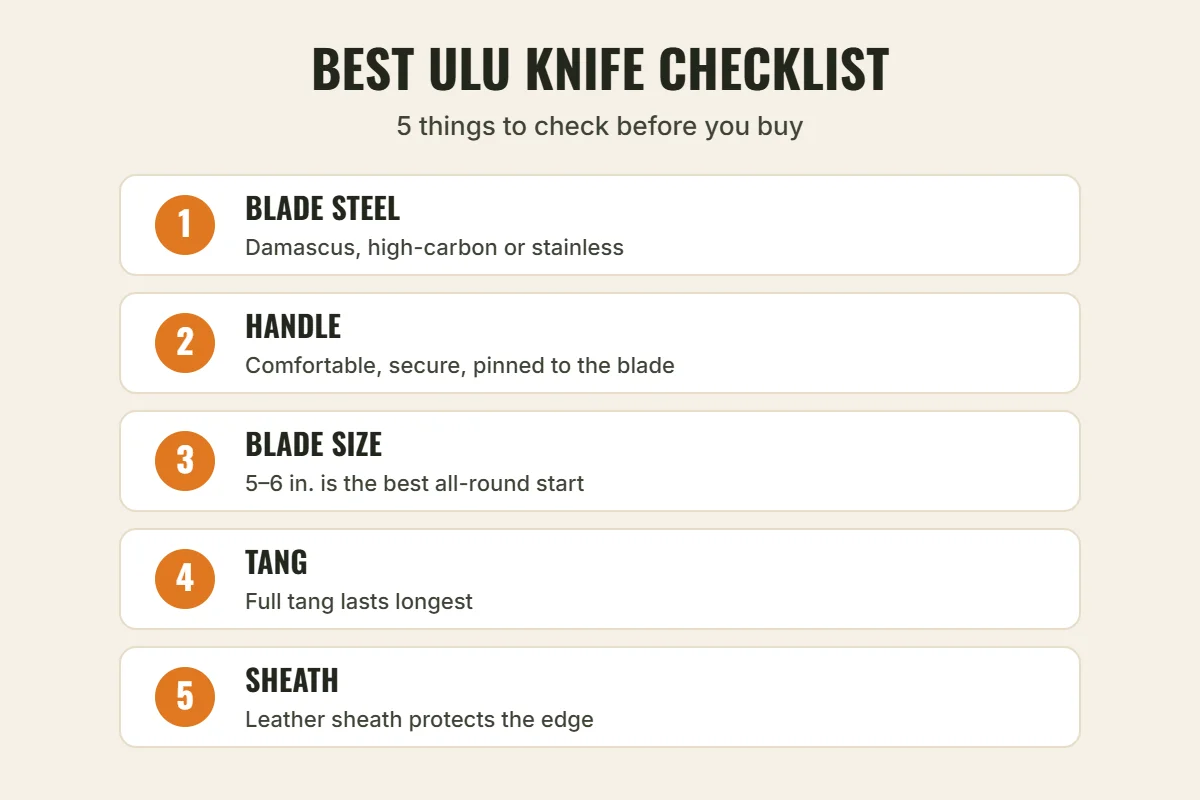
Best Ulu Knife: What to Look For (Buyer’s Checklist)
Not every ulu is made equal. Here’s a section-by-section breakdown of the features that separate a great ulu from a drawer filler.
1. Blade Material
The blade is the heart of any knife, and with ulu knives you’ll see three main options:
| Blade Steel | Edge Retention | Rust Resistance | Sharpening Ease | Look |
|---|---|---|---|---|
| Damascus Steel | Excellent | Moderate (needs oiling) | Moderate | Unique wavy pattern |
| High-Carbon Steel | Very Good | Low (rusts easily) | Easy | Plain, darkens with use |
| Stainless Steel | Good | High | Easy | Shiny, uniform |
Damascus steel is made by layering and folding different types of steel together, which creates that distinctive wavy pattern on the blade. Beyond looks, the layering process can produce a blade that holds its edge well and has a fine cutting ability. The trade-off is that Damascus requires a bit of care — you’ll want to dry it after washing and apply a light coat of oil occasionally. For people who enjoy their tools and don’t mind a minute of maintenance, Damascus is hard to beat.
High-carbon steel sharpens easily and holds a razor edge, but it rusts faster than the other two. It’s a solid working steel, but you’ll need to stay on top of drying and oiling.
Stainless steel is the lowest maintenance option. It won’t rust or stain easily, but it typically doesn’t hold an edge as long as Damascus or high-carbon. For someone who wants a grab-and-go kitchen tool without extra care, stainless works fine.
Our take: If you want the best combination of performance and character, Damascus steel is the top pick. If low maintenance matters most, go stainless. For care tips on Damascus blades specifically, check out our ulu knife care and sharpening guide.
2. Handle Material and Ergonomics
Because an ulu’s handle sits directly on top of the blade, your entire hand wraps around it during use. That makes handle comfort more important on an ulu than on almost any other knife style. Here’s what you’ll encounter:
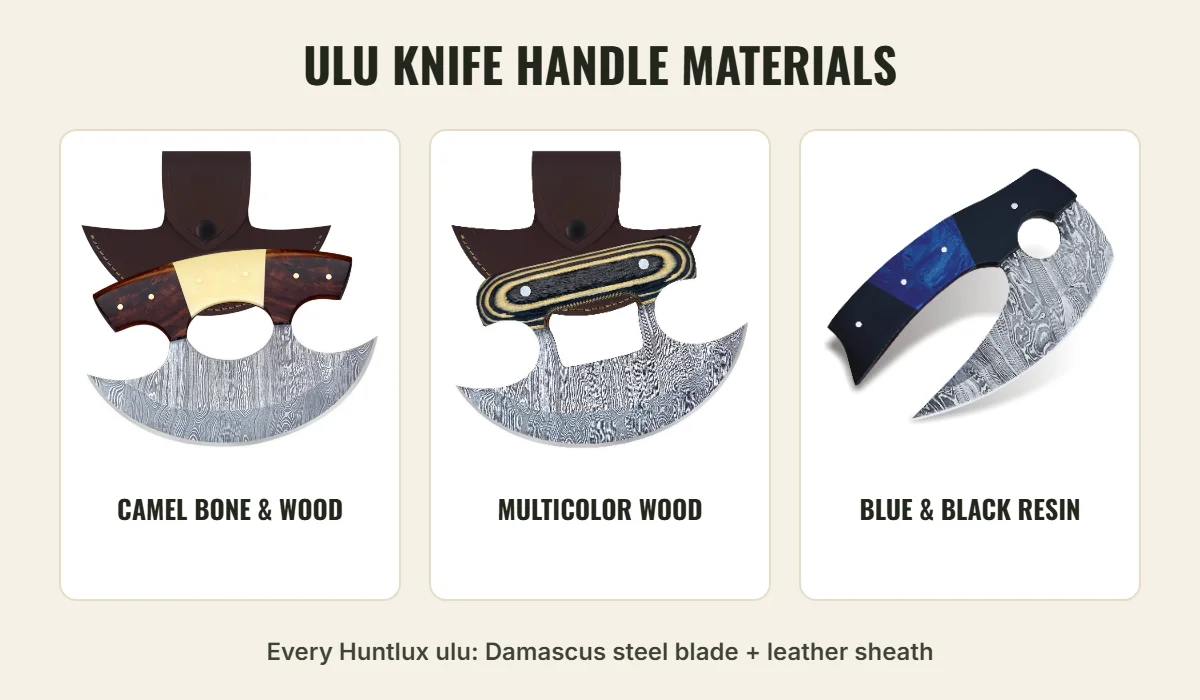
- Hardwood handles — warm feel, natural grip even when slightly wet, ages beautifully. Look for handles made from dense woods like walnut, rosewood, or pakkawood.
- Resin handles — often combined with wood for a striking look. Resin adds moisture resistance and can be shaped for better ergonomics. Blue, red, and black resin-wood combinations are popular.
- Bone handles — traditional and distinctive. Camel bone, for example, offers a smooth texture and a look that’s completely unique to each knife.
- Plastic or rubber handles — cheap ulu knives sometimes use these. They work, but they feel hollow, can crack over time, and take away from the character of the tool.
What to check: Pick up the knife (or look at handle dimensions if buying online) and make sure the handle is wide enough for your palm. A handle that’s too narrow will create pressure points during extended use. Also check that the handle is securely attached — pins or rivets through the tang are a good sign. Glue-only construction is a red flag.
3. Blade Size
Ulu knives generally range from about 4 inches to 7 inches across the blade. Here’s how to think about size:
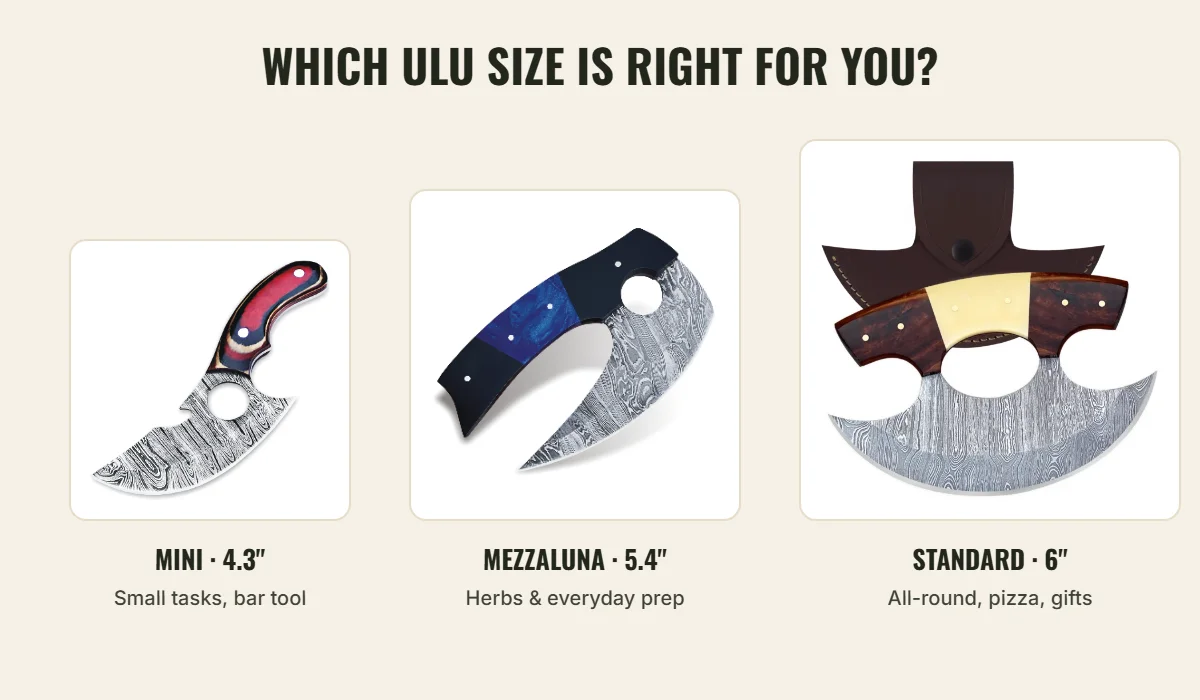
- 4–5 inches (mini ulu): Great for small tasks — mincing garlic, cutting small herbs, or as a handy bar tool. Some mini ulus include extras like a bottle opener on the spine.
- 5–6 inches (standard): The most versatile size. Handles herbs, vegetables, pizza, and general meal prep comfortably. This is where most buyers should start.
- 6–7 inches (large): Better for bigger cutting tasks, larger pizzas, or people with bigger hands who want more blade to work with.
If you’re buying your first ulu, a 5- to 6-inch blade is the safest choice. It’s large enough to handle most kitchen jobs without feeling unwieldy.
4. Tang Construction
The tang is the part of the blade that extends into the handle. This is one of the most overlooked features when buying an ulu, and it directly affects how long your knife will last.
- Full tang: The blade steel runs the entire length of the handle. This gives the best balance and durability. If the handle ever cracks (unlikely with a quality knife), the blade is still firmly attached.
- Partial tang / rat-tail tang: The blade narrows into a thin rod inside the handle. This saves material and weight, but it creates a weak point. Over time, the handle can loosen or wobble.
Bottom line: Always choose full tang if it’s available. It’s worth the extra cost.
5. Sheath and Packaging
A good ulu knife should come with a sheath — both for safe storage and to protect the blade edge. Leather sheaths are the gold standard: they look great, protect the blade, and last for years. Some ulu knives come with plastic or cardboard sleeves instead, which do the job but feel like an afterthought.
If you’re buying an ulu as a gift (and they make excellent gifts), the overall packaging and presentation matter too. A leather sheath instantly makes an ulu feel like a premium item worth displaying.
How to Choose the Best Ulu Knife for Your Needs
Different people buy ulu knives for different reasons. Here’s a quick guide based on common use cases:
Best Ulu for Pizza Cutting
Look for a wider blade (6 inches or more) with a gentle, even curve. A pizza ulu should rock smoothly across a full pie in one or two passes. A resin-and-wood handle adds grip confidence when your hands might be slightly greasy from pizza dough.
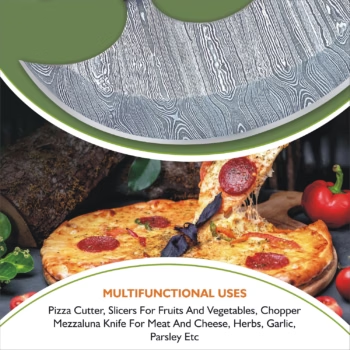
This rocking pizza cutter has a wide Damascus steel blade and a resin-and-wood handle designed for smooth, one-pass pizza slicing. The curved blade cuts through crust and toppings cleanly without dragging cheese.
- Ulu Rocking Pizza Cutter – 6″ Damascus Steel Ulu Knife with Sheath, Resin & Wood Handle Original price was: $54.95.$32.70Current price is: $32.70.
- Rocking pizza cutter and ulu knife in one – 6″ Damascus steel blade
- Slices pizza in a single rocking motion, no dragged toppings
- Resin & wood handle with leather sheath
BUY 2 ULU KNIVES, SAVE 15% – mix any styles, discount applies in cart.✈Free US Shipping
On orders $49+, otherwise $7.99↺14-Day Returns
Unused, with sheath & packaging✓Leather Sheath Included
Safe storage for the blade✉Questions?
Contact us – we reply fast
Buy 2 ulu knives, save 15%.
Best Ulu for Herb Chopping and Meal Prep
A mezzaluna-style ulu in the 5- to 6-inch range is ideal. The rocking motion is perfect for mincing herbs, and the curved blade keeps everything contained. For heavy daily use, Damascus steel holds its edge longer between sharpenings.
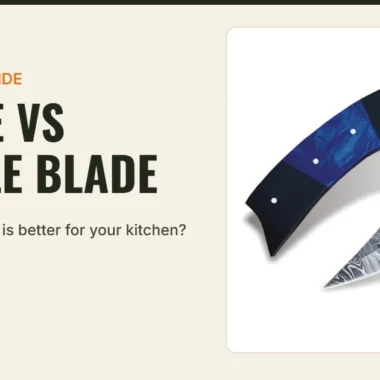
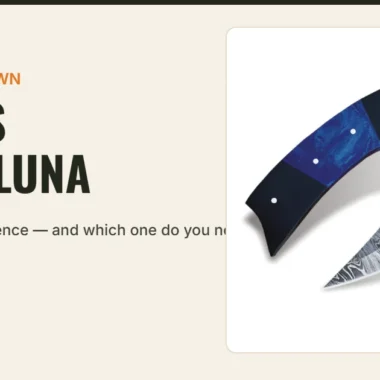
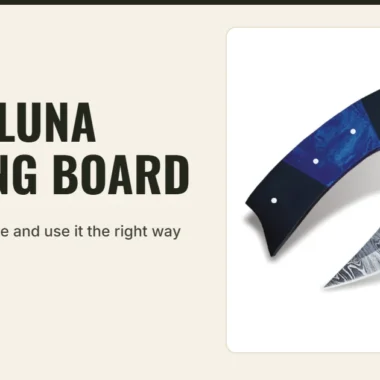
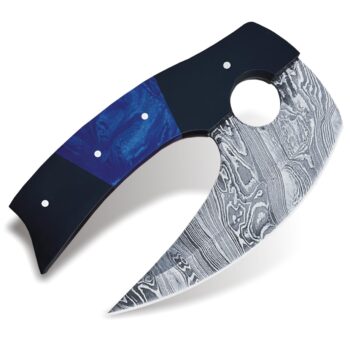
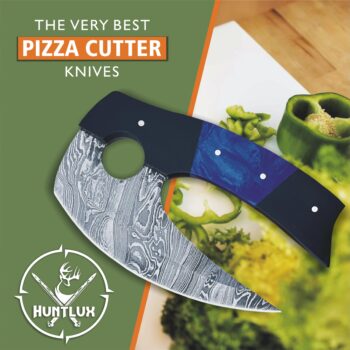
This 5.4-inch mezzaluna ulu is compact enough for detailed herb work but has enough blade width to handle onions, garlic, and small vegetables. The blue-and-black resin handle is moisture resistant and stands out on any kitchen counter.
- Damascus Mezzaluna Ulu Knife – 5.4″ Rocking Herb Chopper with Sheath, Blue & Black Resin Handle Original price was: $64.50.$34.50Current price is: $34.50.
- Mezzaluna-style ulu knife with a 5.4″ Damascus steel blade
- Minces herbs, garlic and veggies fast with a rocking motion
- Blue & black resin handle with leather sheath
BUY 2 ULU KNIVES, SAVE 15% – mix any styles, discount applies in cart.✈Free US Shipping
On orders $49+, otherwise $7.99↺14-Day Returns
Unused, with sheath & packaging✓Leather Sheath Included
Safe storage for the blade✉Questions?
Contact us – we reply fast
Buy 2 ulu knives, save 15%.
Best Ulu as a Gift or Display Piece
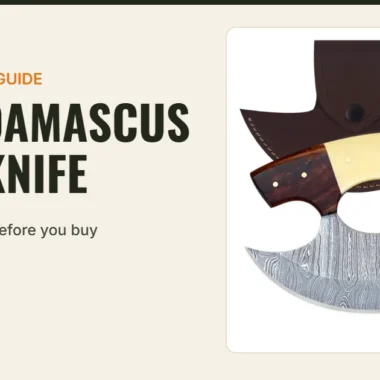
For a gift, prioritize the combination of Damascus steel (the pattern makes every blade one-of-a-kind), a premium handle material like camel bone or figured wood, and a quality leather sheath. The visual impact of a well-made Damascus ulu is hard to match with any other kitchen tool.
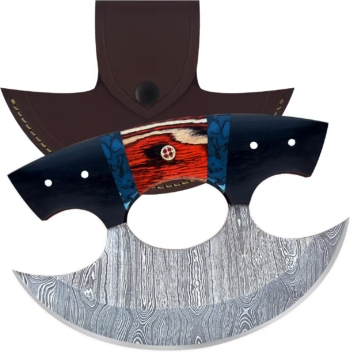
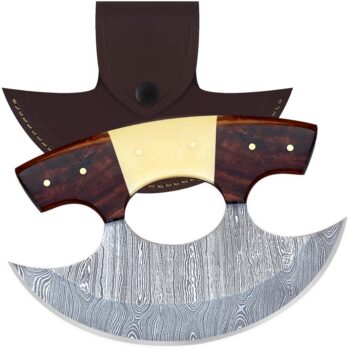
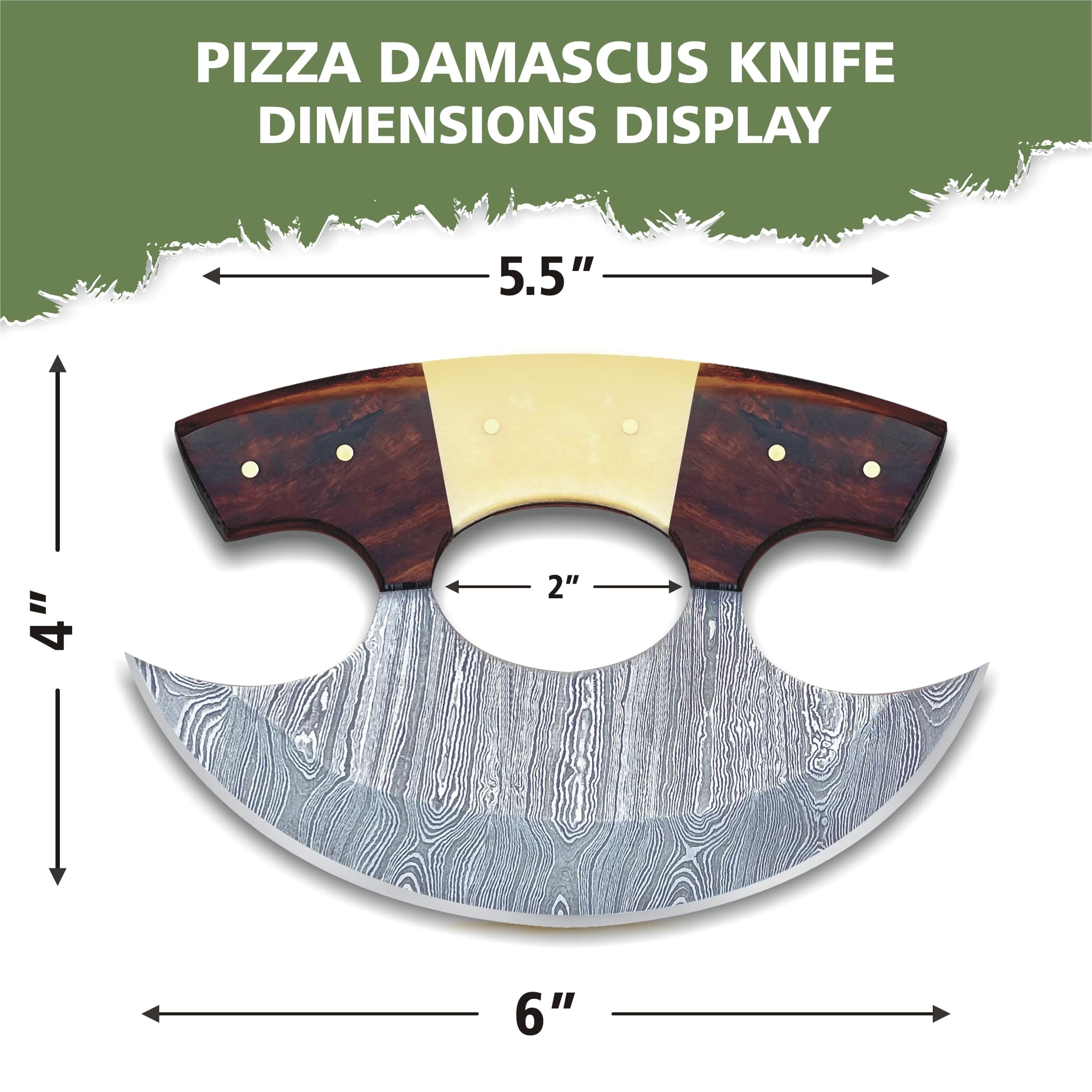
This 6-inch Damascus ulu with a camel bone and wood handle is one of those knives people put on display — and then actually start using because it performs so well. Each blade has a unique Damascus pattern, and it comes with a leather sheath.
- Damascus Ulu Knife with Sheath – 6″ Alaskan-Style Kitchen Chopper, Camel Bone & Wood Handle Original price was: $59.95.$29.99Current price is: $29.99.
- 6″ Damascus steel ulu blade with a natural camel bone & wood handle
- Rocking cut for pizza, herbs, vegetables and cooked meat
- Comes with a leather sheath – ready to gift
BUY 2 ULU KNIVES, SAVE 15% – mix any styles, discount applies in cart.✈Free US Shipping
On orders $49+, otherwise $7.99↺14-Day Returns
Unused, with sheath & packaging✓Leather Sheath Included
Safe storage for the blade✉Questions?
Contact us – we reply fast
Buy 2 ulu knives, save 15%.
Best Ulu Knife Comparison Table
| Feature | Damascus Camel Bone Ulu (6″) | Mezzaluna Ulu (5.4″) | Rocking Pizza Cutter | Multicolor Wood Ulu (6″) | Mini Ulu with Bottle Opener (4.3″) |
|---|---|---|---|---|---|
| Blade Steel | Damascus | Damascus | Damascus | Damascus | Damascus |
| Blade Size | 6 inches | 5.4 inches | See product page | 6 inches | 4.3 inches |
| Handle | Camel bone & wood | Blue & black resin | Resin & wood | Multicolor wood | Red & black |
| Leather Sheath | Yes | Yes | Yes | Yes | Yes |
| Best For | Gift, display, all-around | Herbs, mezzaluna tasks | Pizza, flatbreads | General kitchen use | Bar tool, small tasks |
| Bottle Opener | No | No | No | No | Yes |
Where to Buy Ulu Knives (and What to Avoid)
When searching for the best place to buy ulu knife options, you’ll find them everywhere from big marketplaces to specialty kitchen stores. Here are a few tips to make sure you get a quality product:
Buy from a Specialist
Stores that specialize in ulu knives or handmade kitchen tools tend to offer better quality, more detailed product descriptions, and actual customer support. A specialist seller stakes their reputation on these knives, so they’re less likely to cut corners (pun intended).
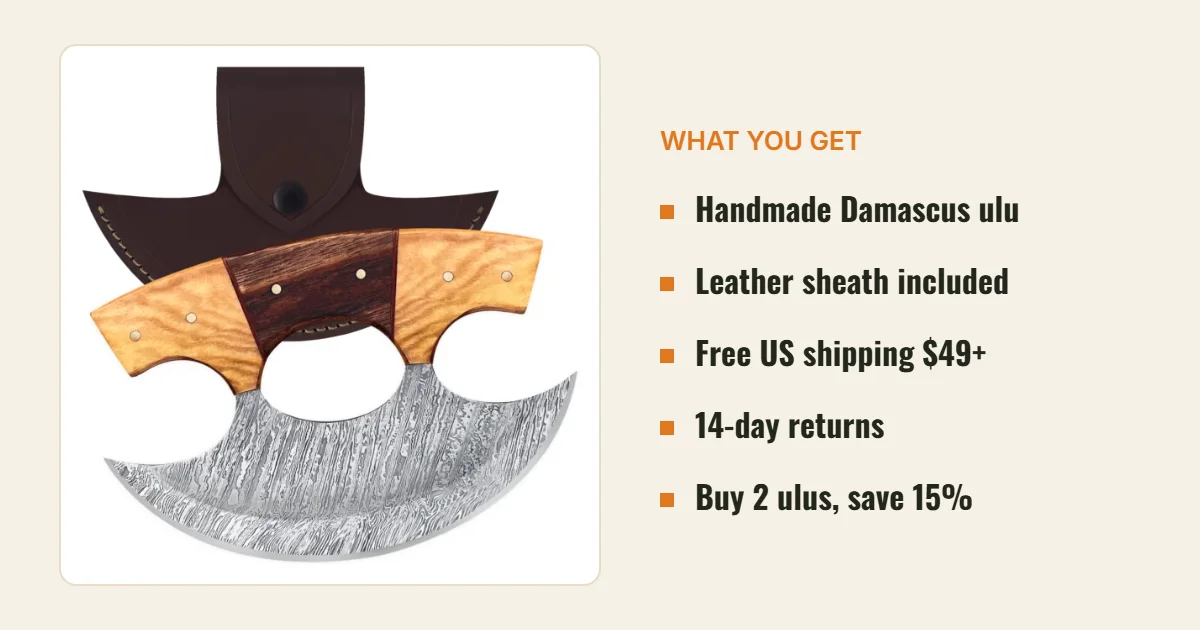
At Huntlux, every ulu knife is handmade from Damascus steel and comes with a leather sheath. You can browse the full collection of ulu knives for sale and see each knife’s blade size, handle material, and photos.
What to Watch Out For
- Vague product descriptions — if a listing doesn’t specify the steel type, blade dimensions, or handle material, that’s a warning sign.
- “Damascus look” or “Damascus-style” — this usually means the pattern is etched onto regular steel, not created by actual layering and folding. Real Damascus has a pattern that goes through the steel, not just on the surface.
- No sheath included — a quality ulu maker includes a sheath. If you have to buy one separately, the knife may not be premium.
- Extremely low prices — a real handmade Damascus ulu requires skilled labor and quality materials. If the price seems too good to be true, the steel or construction probably cuts corners.
Buying Ulu Knives for Sale Online: Shipping Considerations
Keep in mind that some states have restrictions on shipping certain types of knives. A reputable seller will be upfront about shipping policies. Huntlux offers free US shipping on orders over $49 (flat rate $7.99 otherwise) and ships only within the United States.
How to Use Your Ulu Knife (Quick Start)
If you’ve never used an ulu before, here’s the basic technique:
- Grip the handle from the top — your palm rests on the handle with fingers wrapping around the sides. This is different from a regular knife where you grip from behind.
- Place the blade curve on your cutting surface — the rounded edge should sit flat on the board.
- Rock, don’t push — use a back-and-forth rocking motion. Let the curve of the blade do the cutting. You don’t need to lift the blade off the board.
- Use your free hand to guide food under the blade — keep your fingertips curled inward, just like with any sharp kitchen tool.
- For pizza or flatbread — start at one edge and rock the blade across in a single, smooth pass.
It takes about five minutes of practice to feel comfortable, and most people find the rocking motion more natural than they expected. For a deeper look at techniques, sharpening tips, and maintenance, visit our complete ulu knife guide.
Caring for Your Ulu Knife
A good ulu knife will last for years — even decades — with basic care. Here’s what to do:
Cleaning
- Hand wash only. Never put an ulu (especially Damascus steel) in the dishwasher. The harsh detergents and moisture can damage the blade and handle.
- Wash with warm water and mild soap immediately after use.
- Dry thoroughly with a towel right away. Don’t leave it in the sink or on a drying rack.
Oiling
- Apply a thin coat of food-safe mineral oil to the blade every few weeks, or whenever the blade looks dry.
- If your handle is natural wood or bone, a light oil application keeps it from drying and cracking over time.
Storage
- Store your ulu in its leather sheath when not in use. This protects the blade edge and keeps it away from other utensils that could dull it.
- Avoid storing in high-humidity environments without oiling first.
Sharpening
- A curved blade needs a sharpening rod or round honing stone rather than a flat whetstone. Roll the blade along the rod following the curve.
- Most ulu knives only need sharpening every few months with regular home use.
For a complete Damascus-specific care routine, see our guide on ulu knife care, cleaning, and sharpening.
Frequently Asked Questions About Ulu Knives
Still have a question? Contact us – we’re happy to help.
Ready to Find Your Best Ulu Knife?
An ulu knife is one of those tools that surprises people. It looks unusual, but the moment you start rocking that curved blade through a pile of fresh basil or across a hot pizza, it just clicks. The key is buying one that’s well-made — solid steel, a comfortable handle, and a proper sheath — so your first experience is a great one.
Browse the full collection of handmade Damascus ulu knives at Huntlux, where every knife comes with a leather sheath and free US shipping on orders over $49. And if you pick up two, you save 15% automatically.
ABOUT THE AUTHOR
The Huntlux Team
We make and sell handmade Damascus steel ulu knives, each shipped with a leather sheath, and personalized chef knife sets made to order. Our guides come from what we see every day: the questions customers ask before they buy, and how they actually use their ulus for herbs, pizza and everyday meal prep. Huntlux ulu knives are sold here on huntluxstore.com and on Amazon.
Shop this guide: Damascus ulu knife with camel bone handle · multicolor wood ulu knife