What Is an Ulu Blade?
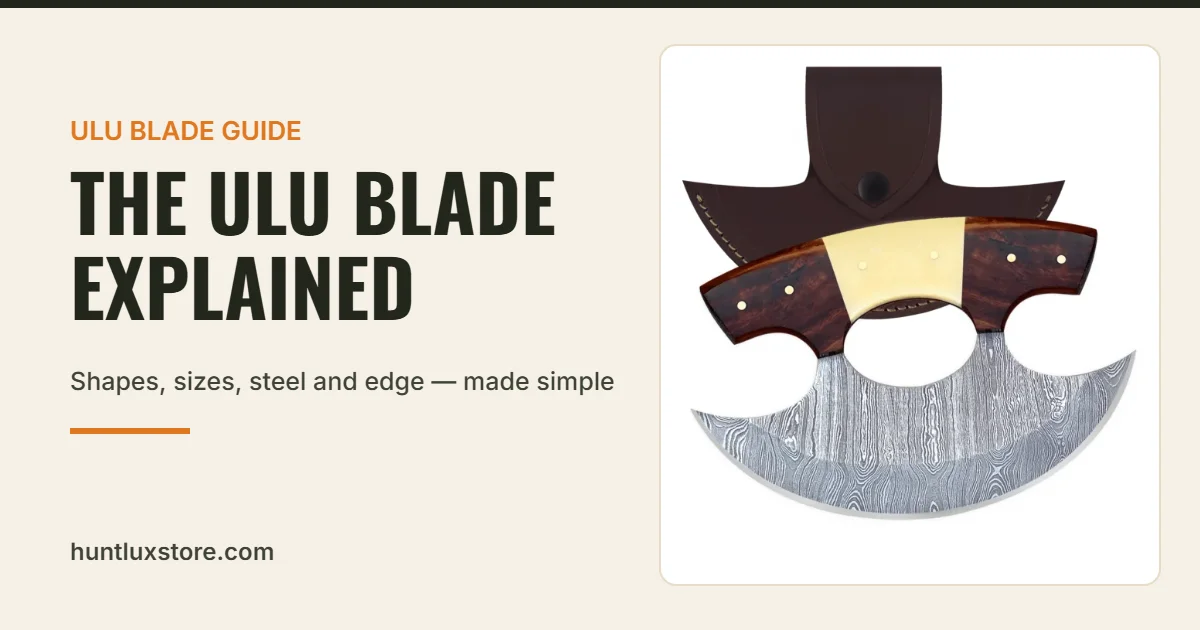
An ulu blade is a wide, crescent-shaped blade with the handle mounted directly above the cutting edge. Instead of slicing back and forth, you rock it across the food, using the whole curve. A good ulu blade has a smooth, even arc, a sharp edge along the full curve, a sturdy connection to the handle and a size that matches the job — usually 4 to 7 inches across.
That simple design is why the ulu has lasted so long and why it feels so natural in the kitchen. In this guide we break down every part of the ulu blade — its shape, size, steel, edge and how it connects to the handle — so you know exactly what you are looking at before you buy or use one. If you want a full shopping checklist, see our ulu knife buyer’s guide.
Anatomy of an Ulu Blade
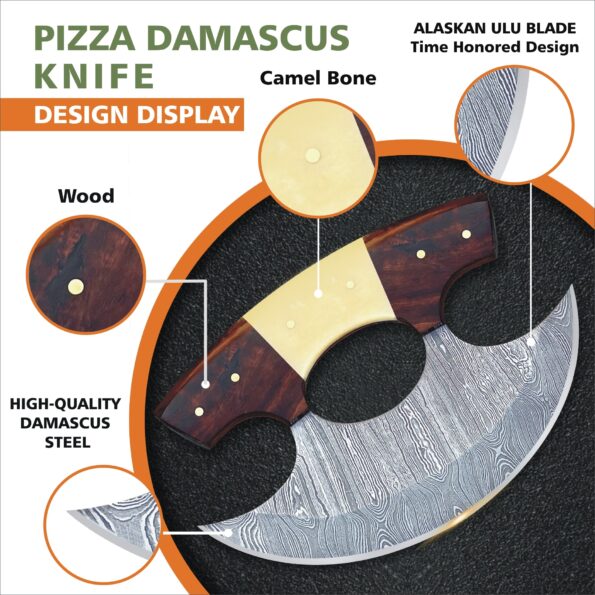
An ulu looks simple, but each part of the blade has a job. Knowing the names makes it easier to compare knives.
- Cutting edge: the long, curved bottom of the blade. On an ulu, almost the entire curve is sharpened, so every part of the arc can cut.
- Spine: the top of the blade, where it meets or connects to the handle. A thicker spine adds strength and weight.
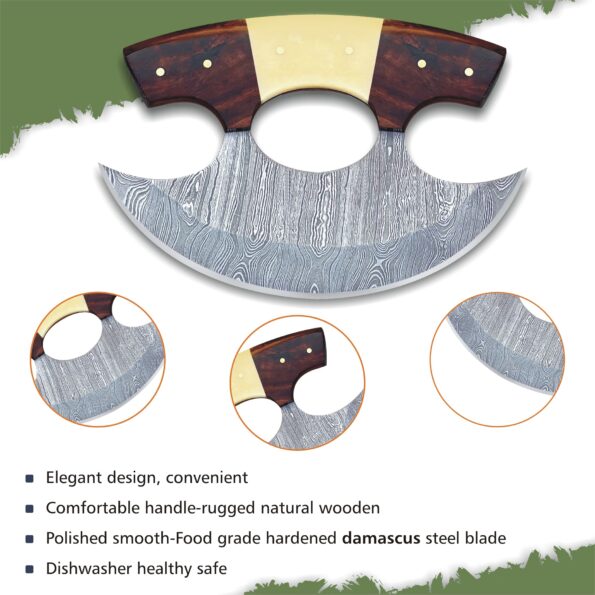
- Blade face: the flat sides of the blade. On Damascus blades this is where the layered pattern shows.
- Tips or points: the two ends of the crescent. They are usually rounded or slightly pointed and help you start and finish a rock.
- Handle connection: the way the blade attaches to the handle — through a center post, a full-width tang, or a blade with finger openings cut into it.
Ulu Blade Shapes
Not every ulu blade is the same shape. The differences are small on paper but big in your hand.
The Classic Crescent
The most familiar ulu blade is a wide half-moon with a gentle, even curve. It rocks smoothly and suits nearly every kitchen task: herbs, vegetables, cheese, cooked meat and pizza. If you are buying your first ulu, a classic crescent is the safest choice.
The Deep Curve
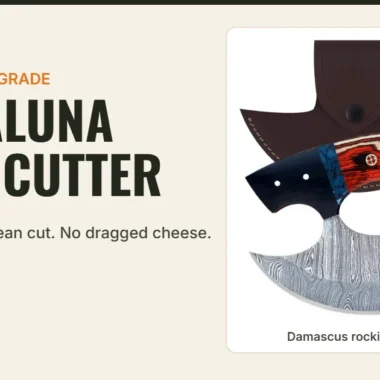
Some blades have a tighter, deeper arc. A deeper curve concentrates pressure on a smaller section of the edge, which makes it fast for mincing herbs and garlic, especially in a bowl board. The trade-off is that it covers less ground per rock on flat food like pizza.
The Shallow Curve
A flatter, wider arc covers more of the cutting board with each rock. That makes it excellent for pizza, flatbreads and slicing long items, but slightly less nimble for fine mincing.
Blades With Finger Openings
Many modern ulus have one or two openings cut through the blade below the handle. These openings lighten the blade, give your fingers a secure place to rest and make the knife easy to hang or display. They do not change how the edge cuts; they change how the knife feels in your hand.
Ulu Blade Sizes
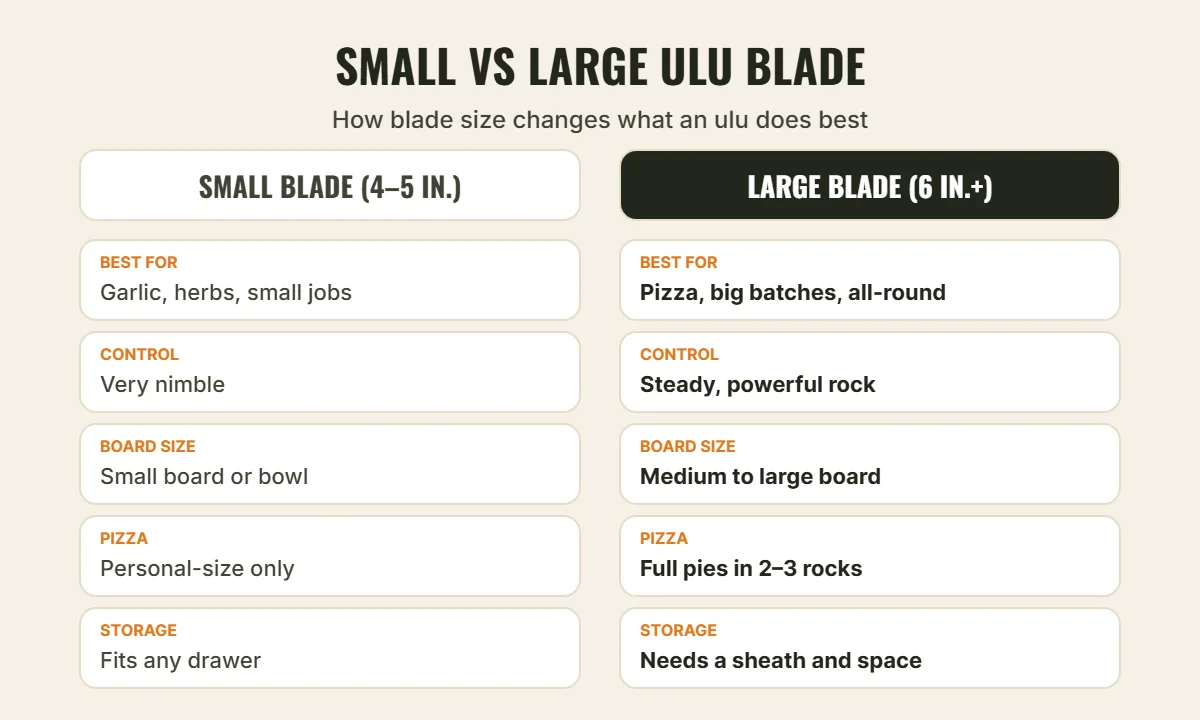
Ulu blades are usually measured across the cutting edge from tip to tip. Most kitchen ulus fall between 4 and 7 inches.
- Mini (about 4–5 inches): light and nimble. Great for garlic, shallots, herbs, small fruit and quick jobs. Some minis add extras like a bottle opener.
- Standard (about 5–6 inches): the most versatile size. It handles herbs, vegetables and personal pizzas comfortably and suits most hands.
- Large (6 inches and up): covers more of the board with every rock. Ideal for full-size pizzas, large batches of vegetables and cooks with bigger hands.
If you are unsure, start with a standard size. It does the widest range of jobs, and you can add a mini later for small tasks.
Ulu Blade Steel
The steel decides how sharp the blade gets, how long it stays sharp and how much care it needs. Kitchen ulus are usually made from one of three types.
| Steel | Rust Resistance | Care Needed | Look | Good For |
|---|---|---|---|---|
| Stainless steel | High | Low | Plain, uniform | Low-maintenance kitchens |
| High-carbon steel | Low | High — dry and oil often | Plain, darkens with use | Cooks who sharpen often |
| Damascus steel | Moderate | Medium — dry and oil lightly | Unique layered pattern | Character, keen edge, gifts |
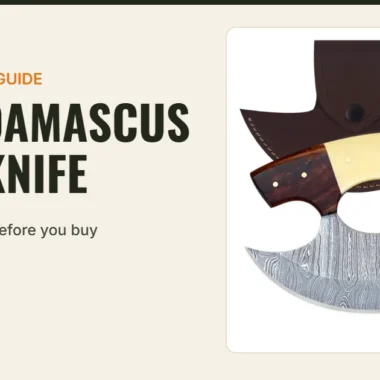
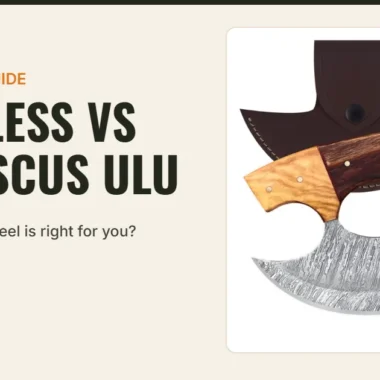
Damascus blades are made by forging layers of different steels together, which reveals a flowing pattern once the blade is finished. Every pattern is one of a kind. Damascus needs a little care — dry it after washing and wipe on a thin coat of oil now and then — but rewards you with a keen edge and a blade that looks like no other. For an honest side-by-side, read stainless steel vs Damascus ulu knife.
The Ulu Edge
The edge is where cutting happens, and on an ulu it runs along the entire curve. A few things to look for:
- Even sharpness from tip to tip: run your eye along the edge in good light. It should look consistent, with no flat spots or nicks.
- A smooth, continuous curve: when you rock the blade on a flat board, every part of the edge should touch down. A bumpy curve leaves uncut strips.
- A durable angle: a very thin edge feels razor-sharp but chips easily; a slightly sturdier edge holds up better for everyday rocking.
How to Keep an Ulu Blade Sharp
A curved edge is easiest to maintain with a honing rod or a round sharpening stone. Hold the rod steady and roll the blade along it, following the curve from one tip to the other. A flat whetstone does not suit a half-moon edge well because only a small part touches at once. Most home cooks only need to touch up the edge every few months. Our ulu knife guide walks through the full routine.
How the Blade Connects to the Handle
An ulu’s handle sits directly above the blade, so the connection takes all the pressure of every rock. A weak joint is the first thing to fail on a cheap ulu.
- Full-width connection: the blade runs up into the handle along much of its length and is secured with pins or rivets. This is the sturdiest design.
- Center post: a single post connects the middle of the blade to the handle. It is traditional and works well when it is solidly fixed.
- Glue-only joints: avoid them. Glue alone can loosen with washing and pressure.
Handle Materials That Pair With the Blade
The handle does not cut, but it decides how comfortable the blade is to use. Wood gives a warm, natural grip. Bone, such as camel bone, adds a smooth, distinctive look. Resin, often combined with wood, adds color and moisture resistance. Whatever you choose, the handle should fill your palm comfortably and be firmly fixed to the blade.
Protecting the Blade: Why a Sheath Matters
A wide, sharp crescent is not something you want loose in a drawer. A sheath protects the edge from knocks that dull it and protects your hands when you reach for it. Leather is the classic choice: it is sturdy, ages well and keeps the blade covered between uses. Always dry the blade fully before sheathing it so moisture is not trapped against the steel.
Matching the Blade to the Job
| Task | Best Blade Size | Best Curve |
|---|---|---|
| Mincing herbs and garlic | Mini or standard | Classic or deep |
| Dicing vegetables | Standard | Classic |
| Slicing pizza and flatbreads | Large | Classic or shallow |
| Cheese and cooked meat | Standard or large | Classic |
| Bar and small tasks | Mini | Classic |
Ulu Blade vs Chef’s Knife Blade
Most kitchens already have a chef’s knife, so it helps to see how an ulu blade differs. They are not rivals; they are good at different things.
| Feature | Ulu Blade | Chef’s Knife Blade |
|---|---|---|
| Shape | Wide crescent, handle on top | Long, straight to gently curved, handle behind |
| Main motion | Rocking side to side | Slicing forward and back |
| Knuckle clearance | Hand sits above the blade | Hand sits behind and beside the blade |
| Strengths | Mincing, chopping piles, pizza, flatbreads | Precise slicing, carving, long cuts |
| Learning curve | A few minutes | Longer to master good technique |
| Wrist strain | Low — pressure goes straight down | Varies with technique |
Many cooks keep both: a chef’s knife for precise slicing and an ulu for anything that benefits from rocking. Once you have an ulu, you may be surprised how often it becomes the first knife you grab.
How to Use an Ulu Blade Correctly
The blade only performs well with the right motion. Here is the basic technique:
- Hold the handle from above with your whole hand, thumb on one side and fingers on the other.
- Set the curve on the board so the middle of the edge touches first.
- Rock from tip to tip with light, steady pressure. Keep the edge in contact with the board instead of lifting and chopping.
- Turn your angle every few rocks for an even mince.
- Scoop and transfer using the wide face of the blade to carry chopped food to the pan.
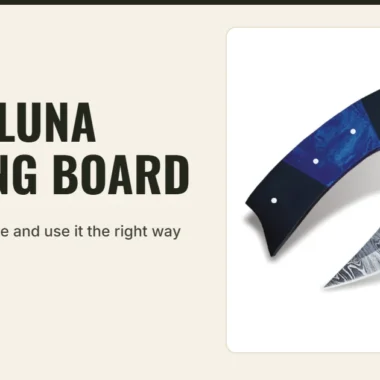
Use a wooden or plastic cutting board, never glass or stone, which dull the edge fast. For board advice, see our guide to the mezzaluna cutting board.
A Short History of the Ulu Blade
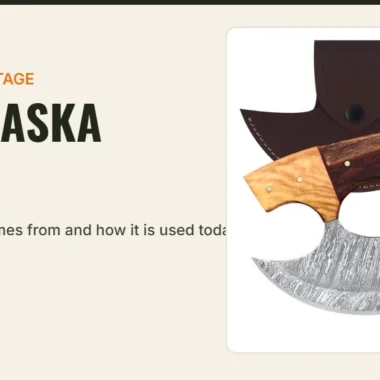
The ulu comes from the Arctic, where Indigenous peoples of Alaska, Canada and Greenland have used it for thousands of years. Early ulu blades were often ground from slate, with handles of bone, antler or wood; later, metal replaced stone. The ulu has long been an everyday tool for preparing food and materials, and in many families it was passed from one generation to the next.
Today’s kitchen ulus keep that same half-moon shape because it works so well. Modern versions use steels like stainless or Damascus and handles of wood, bone or resin, but the rocking motion is the same one cooks have relied on for centuries. Huntlux ulus are Alaskan-style kitchen knives inspired by this design.
Signs of a Well-Made Ulu Blade
- The edge is evenly sharp along the full curve, with no nicks or flat spots.
- The blade sits square to the handle — not tilted to one side.
- The handle is fixed with pins or rivets and does not move when you press down.
- The blade is thick enough at the spine that it does not flex when you rock.
- It arrives with a protective sheath and clear care instructions.
Our Ulu Blade Picks
Every Huntlux ulu has a handmade Damascus steel blade and comes with a leather sheath. Here are three blade sizes for three different kitchens.
Standard 6-Inch Blade
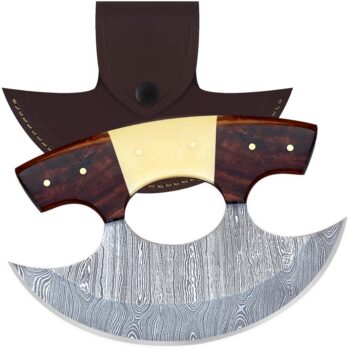
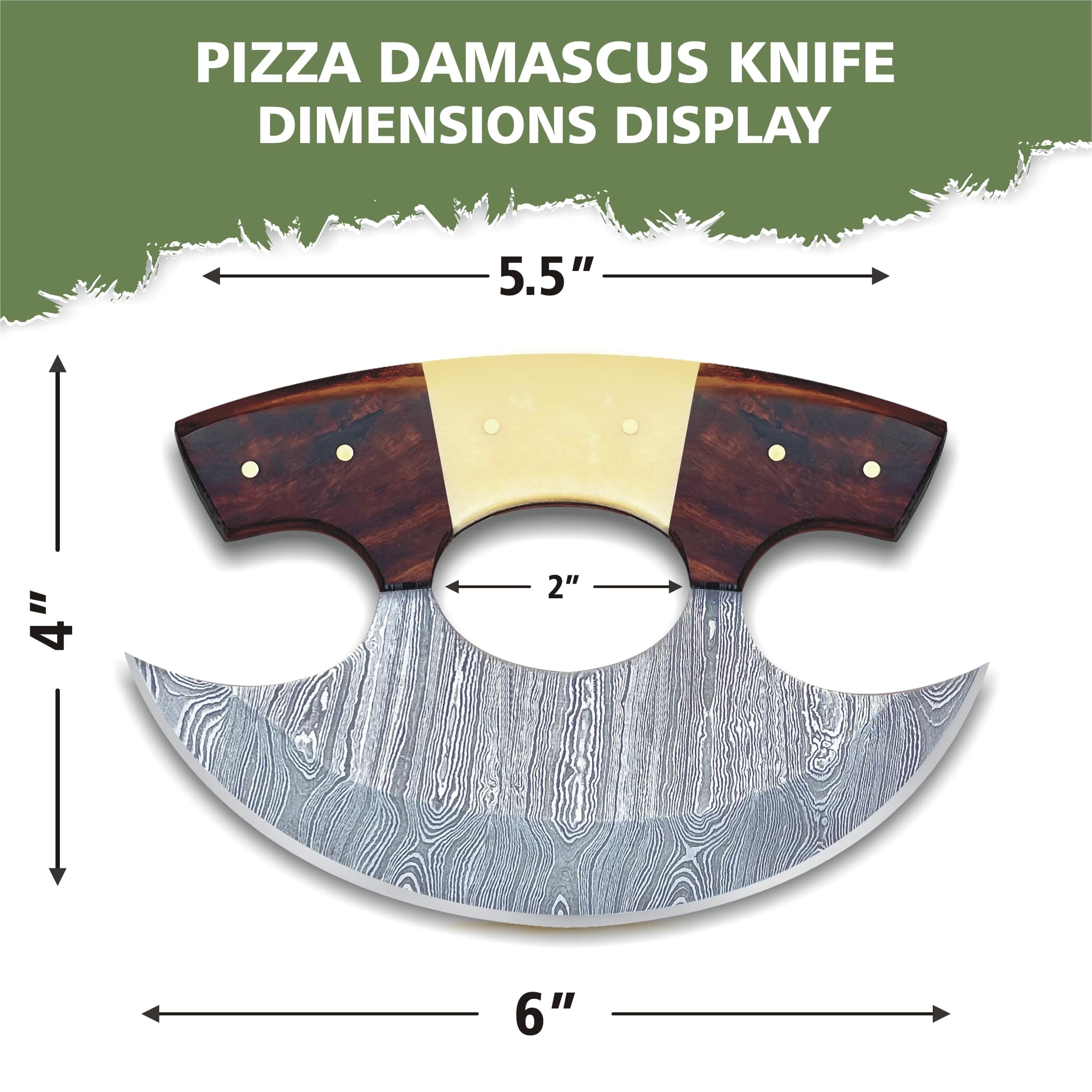
A classic crescent with a 6-inch Damascus blade and a camel bone and wood handle. It is a true all-rounder — herbs, vegetables, pizza — and a gift-ready piece thanks to its one-of-a-kind blade pattern.
- Damascus Ulu Knife with Sheath – 6″ Alaskan-Style Kitchen Chopper, Camel Bone & Wood Handle Original price was: $59.95.$29.99Current price is: $29.99.
- 6″ Damascus steel ulu blade with a natural camel bone & wood handle
- Rocking cut for pizza, herbs, vegetables and cooked meat
- Comes with a leather sheath – ready to gift
BUY 2 ULU KNIVES, SAVE 15% – mix any styles, discount applies in cart.✈Free US Shipping
On orders $49+, otherwise $7.99↺14-Day Returns
Unused, with sheath & packaging✓Leather Sheath Included
Safe storage for the blade✉Questions?
Contact us – we reply fast
Buy 2 ulu knives, save 15%.
5.4-Inch Mezzaluna Blade
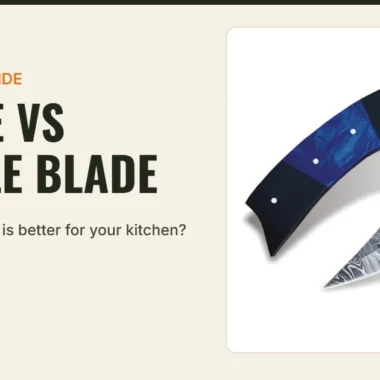
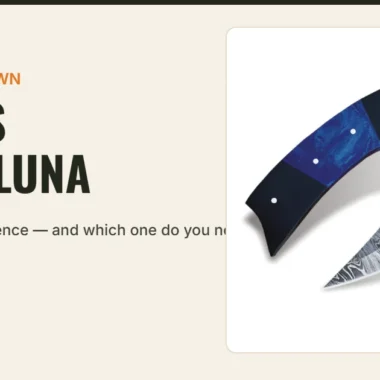
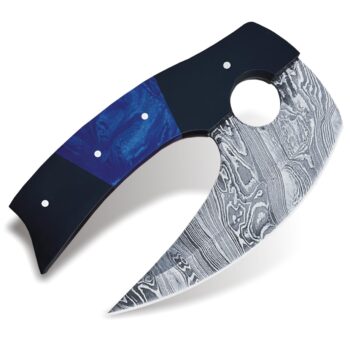
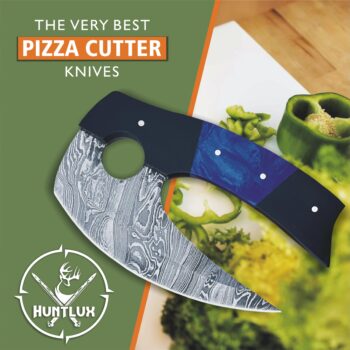
A slightly smaller Damascus blade that is quick and nimble for herbs, garlic and everyday prep, with a blue-and-black resin handle that is easy to grip.
- Damascus Mezzaluna Ulu Knife – 5.4″ Rocking Herb Chopper with Sheath, Blue & Black Resin Handle Original price was: $64.50.$34.50Current price is: $34.50.
- Mezzaluna-style ulu knife with a 5.4″ Damascus steel blade
- Minces herbs, garlic and veggies fast with a rocking motion
- Blue & black resin handle with leather sheath
BUY 2 ULU KNIVES, SAVE 15% – mix any styles, discount applies in cart.✈Free US Shipping
On orders $49+, otherwise $7.99↺14-Day Returns
Unused, with sheath & packaging✓Leather Sheath Included
Safe storage for the blade✉Questions?
Contact us – we reply fast
Buy 2 ulu knives, save 15%.
4.3-Inch Mini Blade
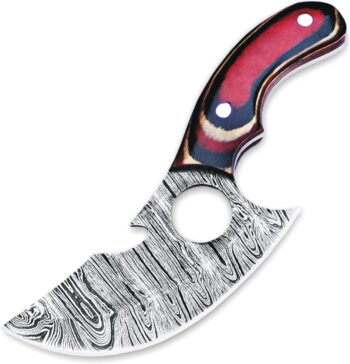
A compact Damascus blade for small jobs, with a built-in bottle opener and a red-and-black handle. Handy at the counter or the bar.
- Mini Ulu Knife with Bottle Opener – 4.3″ Damascus Steel Chopper with Sheath, Red & Black Handle Original price was: $49.99.$31.99Current price is: $31.99.
- Mini ulu knife with a 4.3″ Damascus steel blade
- Built-in bottle opener on the handle
- Red & black handle with leather sheath – great gift
BUY 2 ULU KNIVES, SAVE 15% – mix any styles, discount applies in cart.✈Free US Shipping
On orders $49+, otherwise $7.99↺14-Day Returns
Unused, with sheath & packaging✓Leather Sheath Included
Safe storage for the blade✉Questions?
Contact us – we reply fast10 in stock
Buy 2 ulu knives, save 15%.
Compare every size and handle in the ulu knife collection.
Ulu Blade Care in 30 Seconds
- Hand wash with warm water and mild soap — never the dishwasher.
- Dry the blade immediately and completely.
- Wipe a thin coat of food-safe mineral oil on Damascus or carbon blades now and then.
- Store the blade in its sheath, in a dry place.
Common Ulu Blade Problems and Fixes
- The blade leaves uncut strips: the edge has a dull or flat section. Hone along the full curve, paying attention to that spot.
- Food sticks to the blade: dry ingredients first, and wipe the blade between batches.
- Small spots appear on the steel: the blade was left wet. Wipe with a little oil and a soft cloth, then dry and oil after each use.
- The handle feels loose: stop using it and check the joint. A well-made ulu with pins or rivets should not loosen in normal use.
Choosing an Ulu Blade as a Gift
An ulu makes a thoughtful gift because it is useful every day and a little unexpected. For gifting, focus on three things: a blade pattern or finish that looks special, a handle material with character such as camel bone or figured wood, and a sheath so it arrives ready to use and safe to store. A standard 6-inch blade suits most home cooks; a mini blade makes a fun stocking stuffer or host gift. Add a short note on how to rock the blade and how to dry and oil it, and the gift is complete.
Frequently Asked Questions
Still have a question? Contact us — we’re happy to help.
Choose the Right Ulu Blade
A great ulu blade comes down to a smooth curve, a sharp edge along the whole arc, the right size for your cooking, a solid handle connection and a sheath to protect it. Get those right and you will reach for your ulu every day.
Ready to find yours? Browse handmade Damascus ulu knives at Huntlux. Every blade comes with a leather sheath, US orders over $49 ship free, and buying two saves you 15%.
ABOUT THE AUTHOR
The Huntlux Team
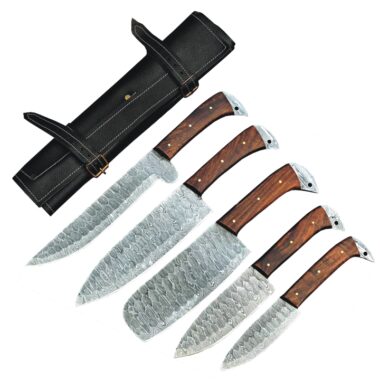
We make and sell handmade Damascus steel ulu knives, each shipped with a leather sheath, and personalized chef knife sets made to order. Our guides come from what we see every day: the questions customers ask before they buy, and how they actually use their ulus for herbs, pizza and everyday meal prep. Huntlux ulu knives are sold here on huntluxstore.com and on Amazon.
Shop this guide: Damascus ulu knife with camel bone handle · ulu knife with sheath