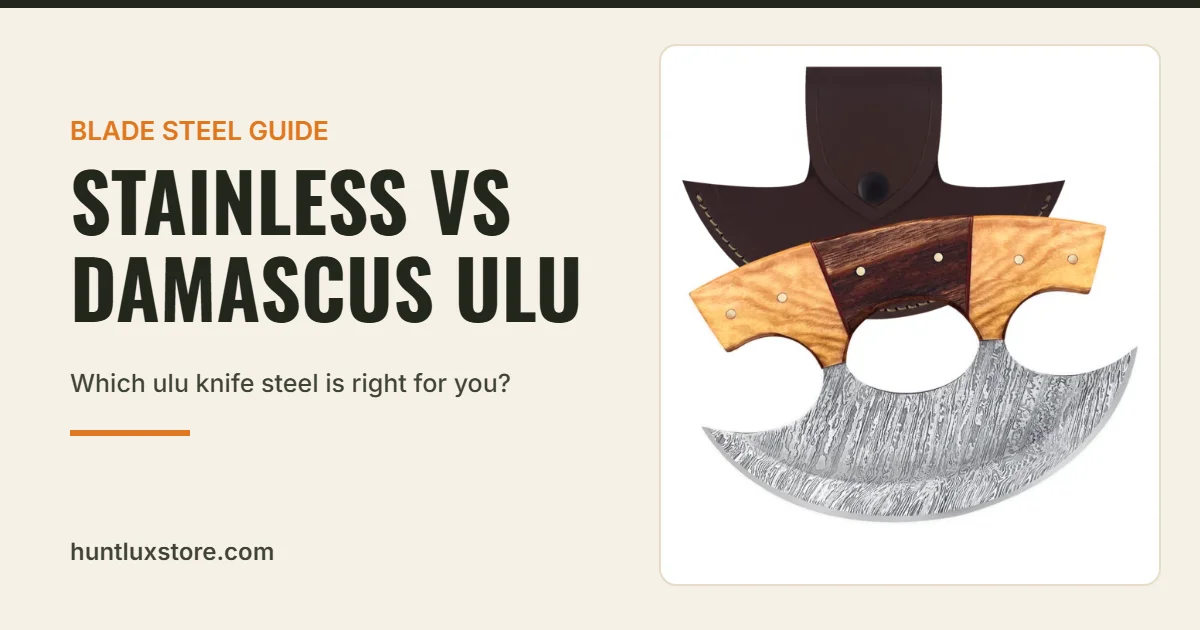
Stainless Steel vs Damascus Ulu Knife: The Short Answer
A stainless steel ulu knife is the easiest to own: it resists rust, needs almost no care and suits anyone who wants a grab-and-go kitchen tool. A Damascus ulu knife has a layered, one-of-a-kind blade pattern and a keen edge, but it needs drying and a little oil. Choose stainless for zero fuss; choose Damascus for character, feel and gifting.
Both are good choices, and the right one depends on how you cook and how much care you want to give a knife. Below we compare the two steels honestly — how they are made, how they handle rust, sharpness, care, looks and value — so you can decide with confidence. For a full walk-through of handles, sizes and sheaths, see our ulu knife buyer’s guide.
What Is a Stainless Steel Ulu Knife?
Stainless steel is steel with chromium added. The chromium forms a thin, invisible layer on the surface that helps protect the metal from moisture and stains. That is why stainless knives can sit on a drying rack for a while without spotting, and why they are the default choice for most everyday kitchen tools.
A stainless steel ulu knife uses this same steel in the classic half-moon shape. It rocks through herbs, vegetables and pizza just like any ulu. The blade has a smooth, uniform finish, and its appeal is practicality: it is forgiving, easy to clean and widely available.
Strengths of a Stainless Ulu
- High rust resistance: a forgotten wet blade is less likely to spot.
- Very low maintenance: wash, dry and put it away. No oiling routine needed.
- Consistent look: a clean, shiny finish that matches other stainless kitchen tools.
- Easy to find: stainless ulus come in many sizes and styles.
Trade-Offs of a Stainless Ulu
- Plain appearance: the blade looks like most other kitchen knives.
- Edge feel varies: quality ranges widely. Thin, stamped stainless blades can feel flimsy and lose their edge sooner.
- Less gift appeal: a plain blade rarely becomes a display piece or a talking point.
What Is a Damascus Ulu Knife?
Damascus steel, as it is made today, is pattern-welded steel. Layers of different steels are stacked, heated, forged together, then folded and shaped. When the finished blade is etched, the different layers react differently and reveal the wavy, flowing pattern Damascus is known for. Because the layers move in their own way during forging, no two blades have exactly the same pattern.
A Damascus ulu knife puts that layered blade into the traditional rocking shape. It does every job a stainless ulu does — herbs, garlic, vegetables, pizza, flatbreads — with a look and feel many cooks love. Every Huntlux ulu is a handmade Damascus steel blade and ships with a leather sheath.
Strengths of a Damascus Ulu
- Distinctive pattern: each blade is one of a kind, which makes it a natural gift and conversation piece.
- Keen edge: a well-made Damascus blade takes a sharp edge and gives a satisfying, controlled cut.
- Premium feel: paired with wood, bone or resin handles, a Damascus ulu feels like a crafted tool rather than a utensil.
- Long life with care: treated well, it lasts for many years and often looks better with time.
Trade-Offs of a Damascus Ulu
- Needs drying and oiling: leave it wet and it can develop surface spots.
- No dishwasher: hand washing only.
- Quality varies: some products sold as “Damascus” only have a printed or laser-etched pattern on plain steel. Real pattern-welded Damascus shows the pattern through the steel, not just on top.
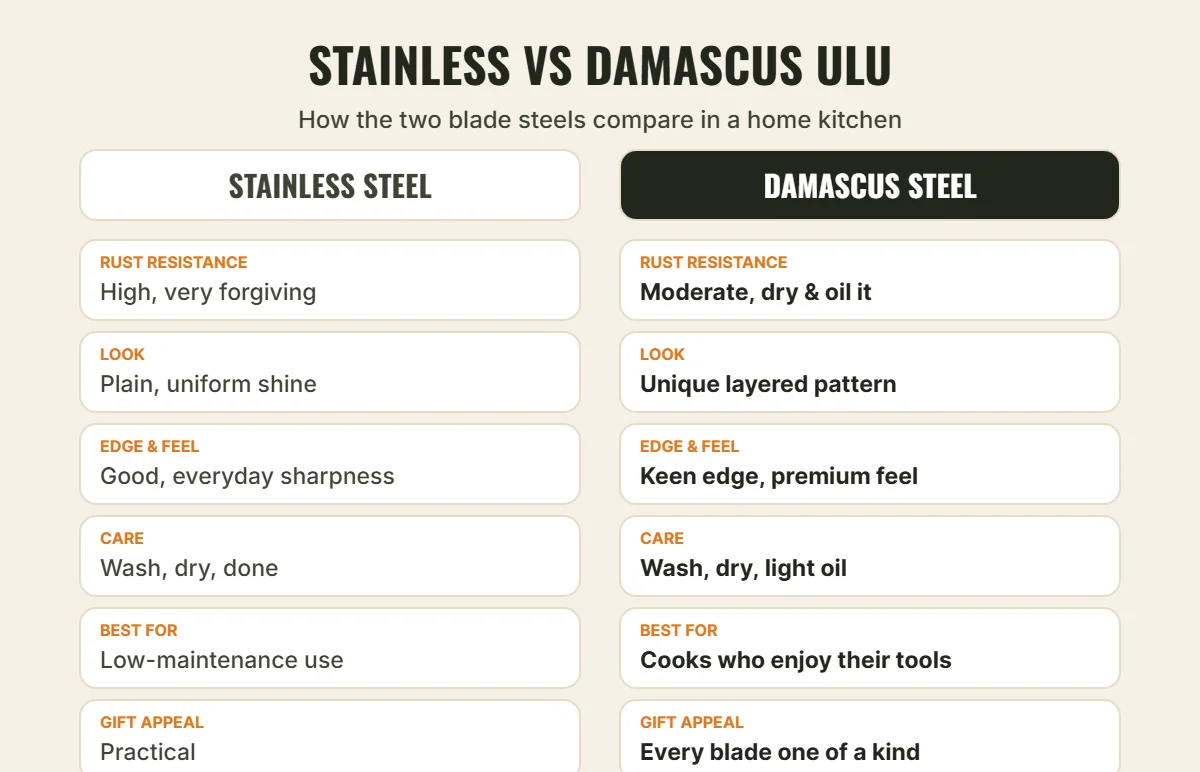
Stainless Steel vs Damascus Ulu Knife: Side-by-Side
| Factor | Stainless Steel Ulu | Damascus Ulu |
|---|---|---|
| How it is made | Single stainless alloy | Layers of steel forged together (pattern-welded) |
| Rust resistance | High | Moderate — dry it and oil it lightly |
| Everyday care | Wash and dry | Wash, dry right away, occasional oil |
| Appearance | Plain, uniform | Unique wavy pattern on every blade |
| Cutting feel | Good; depends on quality | Keen and controlled on a well-made blade |
| Sharpening | Rod or round stone | Rod or round stone |
| Gift appeal | Practical | High — a display-worthy piece |
| Best for | Low-maintenance kitchens | Cooks who enjoy their tools; gifts |
Rust and Corrosion: The Biggest Difference
This is where the two steels differ most. Stainless steel’s chromium layer makes it resistant to the everyday moisture of a kitchen. That does not mean it can never stain — long soaks, salty water or acidic foods left on the blade can still mark it — but it is very forgiving.
Damascus blades usually include high-carbon layers, which is part of what gives them their character and edge. Carbon-rich steel reacts with moisture and acids more readily, so a Damascus ulu should not be left wet. Over time, many Damascus blades also build a gentle patina — a natural darkening from use — which is normal and protects the surface.
The good news: keeping a Damascus ulu rust-free is simple. Wash it soon after use, dry it right away, and wipe on a thin coat of food-safe mineral oil every so often. It takes about a minute.
Sharpness and Edge Retention
How sharp a knife gets and how long it stays sharp depend more on the specific steel, the heat treatment and the craftsmanship than on the label alone. A cheap stainless blade and a cheap Damascus blade can both disappoint, and a well-made version of either can perform well.
That said, many cooks find a good Damascus ulu takes a keen edge and gives a crisp, controlled cut through herbs and vegetables. Stainless ulus at the budget end often use softer steel that is easy to sharpen but needs it more often.
Whichever you choose, the curved edge sharpens the same way: roll it along a honing rod or a round sharpening stone, following the curve. A flat whetstone does not suit a half-moon blade well. Our ulu knife guide covers the full sharpening routine.
Care and Maintenance Compared
Stainless Steel Ulu Care
- Hand wash with warm water and mild soap.
- Dry with a towel.
- Store in a sheath or a safe spot where the edge will not knock against other tools.
Damascus Ulu Care
- Hand wash soon after use, especially after acidic foods like tomatoes, citrus or onions.
- Dry immediately and completely. Do not leave it in the sink or on a drying rack.
- Wipe on a thin coat of food-safe mineral oil now and then, or whenever the blade looks dry.
- Store it in its leather sheath, in a dry place.
Neither steel should go in the dishwasher. Dishwasher heat, harsh detergent and rattling against other items dull the edge and can damage handles made from wood, bone or resin. For step-by-step cleaning, oiling and sharpening, see the complete ulu knife guide.
Looks and Gift Appeal
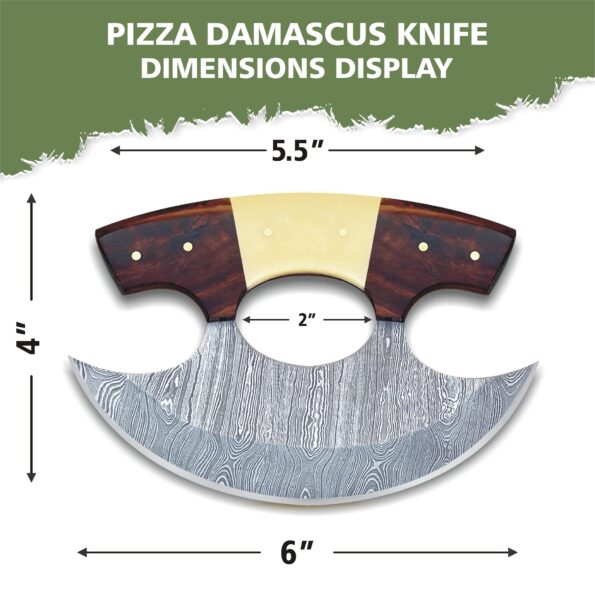
If the ulu is a gift, this is often the deciding factor. A stainless ulu is a useful present; a Damascus ulu is a memorable one. The flowing pattern catches the eye, and because every blade is unique, the person receiving it knows nobody else has exactly the same knife.
Handle material adds to the effect. Camel bone, figured wood and resin-and-wood combinations pair especially well with a Damascus blade, and a leather sheath makes it feel complete and ready to give. Damascus ulus are popular gifts for home cooks, pizza lovers, new homeowners and anyone who enjoys well-made kitchen tools.
Price and Value
Stainless ulus range from very inexpensive to mid-priced. Damascus ulus usually cost more because pattern-welding takes more material, time and skill. Value comes down to what you want from the knife:
- If you want a basic, low-maintenance tool you will not think about, a decent stainless ulu is good value.
- If you want a tool that feels special to use, looks great on the counter, and makes a strong gift, a Damascus ulu is worth the extra.
- Be wary of very cheap “Damascus” listings with vague descriptions; a printed pattern is not the same as layered steel.
Stainless vs Damascus in Everyday Kitchen Tasks
Steel choice shows up most in how a knife fits your routine. Here is how the two compare across the jobs an ulu does most often.
Chopping Fresh Herbs
Herbs reward a keen edge. A sharp blade slices through basil and parsley cleanly instead of crushing them, which keeps the color bright and the flavor fresh. A well-made Damascus ulu is a pleasure here. A good stainless ulu works too; just keep it sharp. Either way, dry the herbs first so they do not stick to the blade.
Dicing Onions, Tomatoes and Citrus
Acidic and juicy foods are where care matters. A stainless blade shrugs them off. A Damascus blade is fine too, but rinse and dry it soon after you finish, rather than leaving juice on the steel while you cook the rest of the meal.
Slicing Pizza and Flatbreads
For pizza, blade width and a smooth curve matter more than the steel. Both steels rock cleanly through crust and toppings when the edge is sharp. Cheese and sauce wash off easily from either; just do not leave a Damascus blade sitting in the sink overnight.
Mincing Garlic and Nuts
Both steels handle garlic and nuts with ease. Garlic juice is mildly acidic, so give a Damascus blade a quick rinse and dry once you are done.
Common Myths About Damascus and Stainless Ulus
- “Stainless never stains.” It resists stains very well, but long soaks, salty water or acidic food left on the blade can still mark it.
- “Damascus is too fussy for real cooking.” The care routine is just wash, dry and an occasional wipe of oil. Many cooks use Damascus every day.
- “The pattern is just for looks.” The pattern comes from layered steel forged together. A real pattern is a sign of how the blade was made, not a print on the surface.
- “A darker blade means it is ruined.” A gentle grey patina on a Damascus blade is normal and even protective. Red or orange spots are rust; remove them early with a little oil and a soft cloth.
- “Any steel works on a glass board.” Glass, stone and ceramic dull every steel quickly. Use a wood or plastic board for both.
Which Should You Buy?
Choose a Stainless Steel Ulu If…
- You want a knife you can wash, dry and forget.
- The ulu will live in a busy shared kitchen where it may sit wet.
- Looks do not matter much to you.
Choose a Damascus Ulu If…
- You enjoy good tools and don’t mind a minute of care.
- You want a blade with character that looks great on the counter.
- You are buying a gift that should feel special.
- You want a keen edge for herbs, vegetables and pizza.
We make Damascus ulus because we love the combination of performance and character, but we will be honest: if zero maintenance is your top priority, stainless is the better match. If you are happy to dry and oil your blade, Damascus gives you more to enjoy every time you use it.
Our Damascus Ulu Picks
Every Huntlux ulu has a handmade Damascus steel blade and comes with a leather sheath. Here are three that show off what Damascus does best.
Best for a Warm, Natural Look
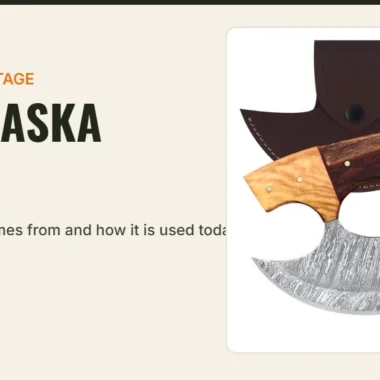
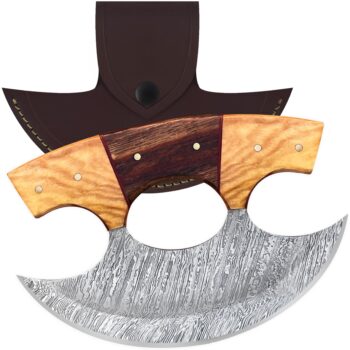
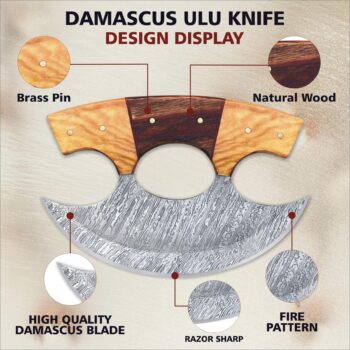
This Damascus ulu pairs the layered blade with a light and dark wood handle for a warm, natural look. It is a versatile everyday rocker for herbs, vegetables and flatbreads.
- Alaskan-Style Ulu Knife – 6″ Damascus Steel Rocking Chopper with Sheath, Light & Dark Wood Handle Original price was: $54.95.$29.99Current price is: $29.99.
- Alaskan-style ulu knife with a 6″ Damascus steel rocking blade
- Two-tone light & dark wood handle
- Chops herbs, slices pizza, preps veggies – with a leather sheath
BUY 2 ULU KNIVES, SAVE 15% – mix any styles, discount applies in cart.✈Free US Shipping
On orders $49+, otherwise $7.99↺14-Day Returns
Unused, with sheath & packaging✓Leather Sheath Included
Safe storage for the blade✉Questions?
Contact us – we reply fast
Buy 2 ulu knives, save 15%.
Best Gift-Ready Damascus Ulu
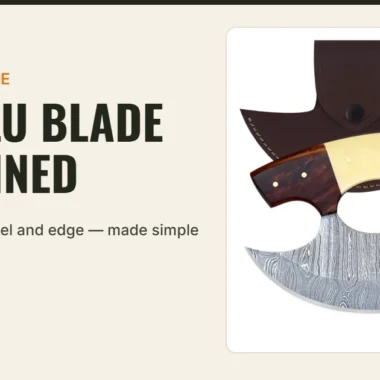
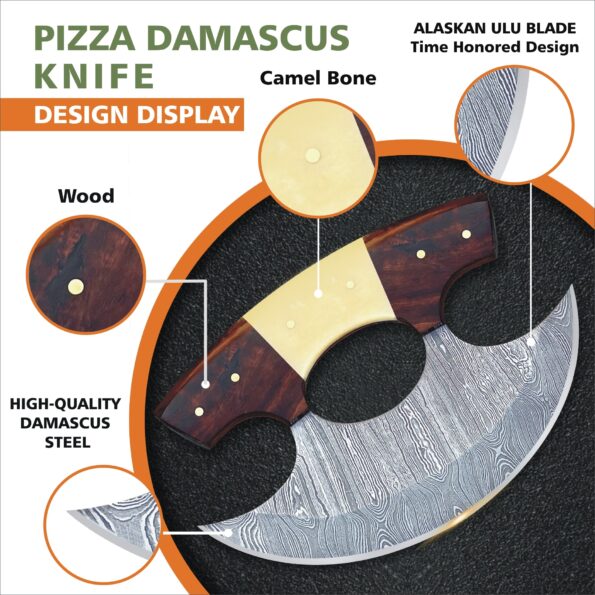
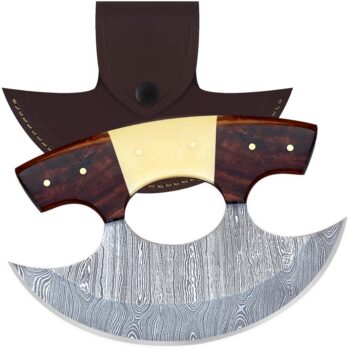
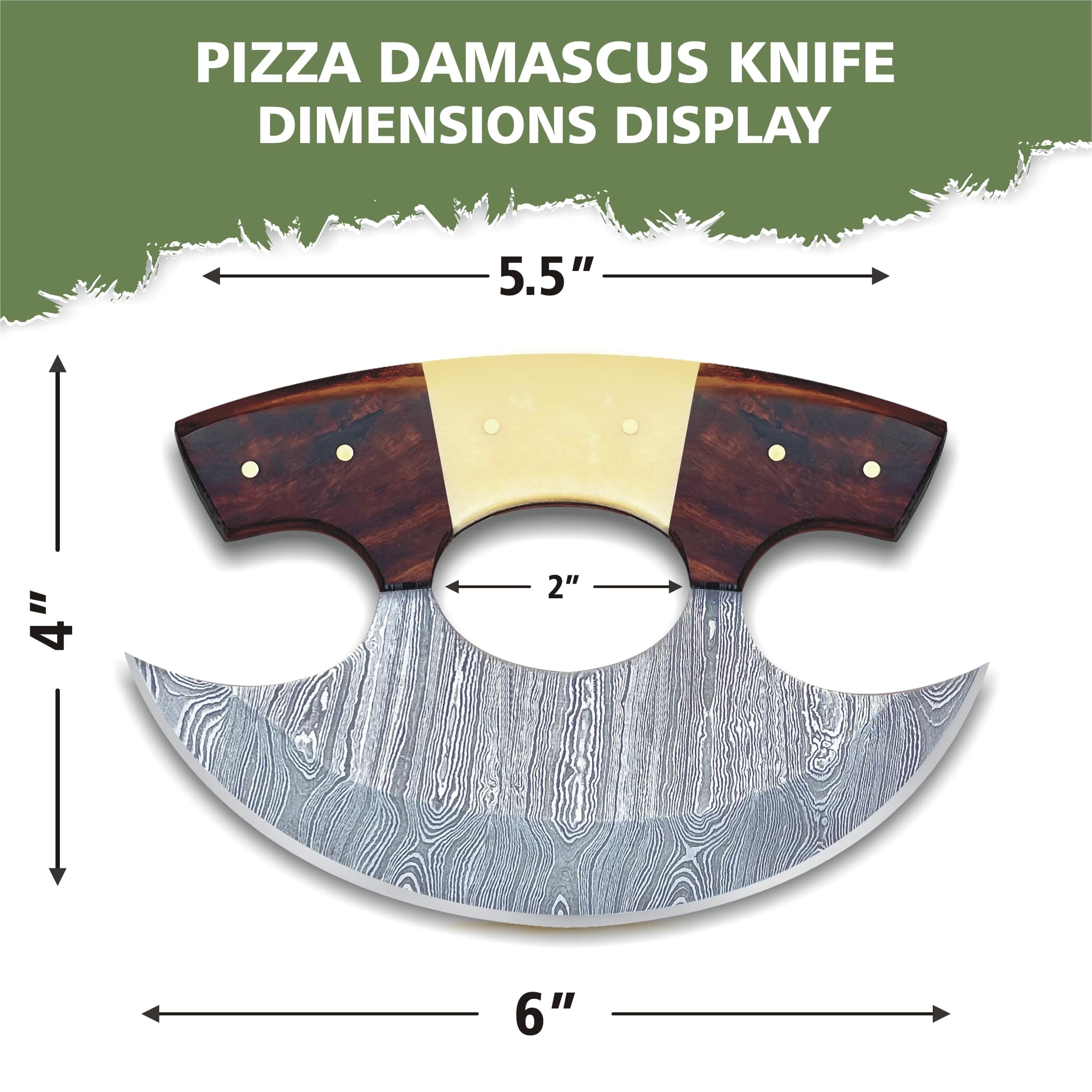
The 6-inch Damascus ulu with a camel bone and wood handle is our most gift-ready piece. The contrast between the bone, the wood and the Damascus pattern makes it stand out on any counter.
- Damascus Ulu Knife with Sheath – 6″ Alaskan-Style Kitchen Chopper, Camel Bone & Wood Handle Original price was: $59.95.$29.99Current price is: $29.99.
- 6″ Damascus steel ulu blade with a natural camel bone & wood handle
- Rocking cut for pizza, herbs, vegetables and cooked meat
- Comes with a leather sheath – ready to gift
BUY 2 ULU KNIVES, SAVE 15% – mix any styles, discount applies in cart.✈Free US Shipping
On orders $49+, otherwise $7.99↺14-Day Returns
Unused, with sheath & packaging✓Leather Sheath Included
Safe storage for the blade✉Questions?
Contact us – we reply fast
Buy 2 ulu knives, save 15%.
Best for Pizza Night
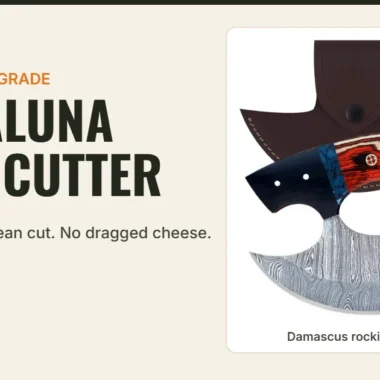
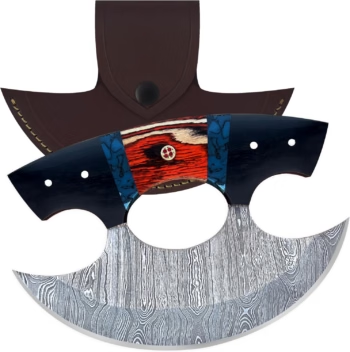
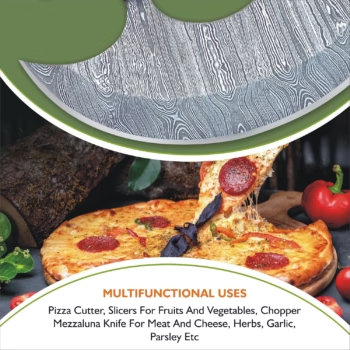
If pizza is on the menu every week, this Damascus rocking pizza cutter with a resin-and-wood handle rocks smoothly across the pie for clean slices without dragging the cheese.
- Ulu Rocking Pizza Cutter – 6″ Damascus Steel Ulu Knife with Sheath, Resin & Wood Handle Original price was: $54.95.$32.70Current price is: $32.70.
- Rocking pizza cutter and ulu knife in one – 6″ Damascus steel blade
- Slices pizza in a single rocking motion, no dragged toppings
- Resin & wood handle with leather sheath
BUY 2 ULU KNIVES, SAVE 15% – mix any styles, discount applies in cart.✈Free US Shipping
On orders $49+, otherwise $7.99↺14-Day Returns
Unused, with sheath & packaging✓Leather Sheath Included
Safe storage for the blade✉Questions?
Contact us – we reply fast
Buy 2 ulu knives, save 15%.
See all blade sizes and handle styles in the ulu knife collection.
How to Spot Real Damascus Steel
- The pattern runs through the steel: look at the spine and the edge. On real pattern-welded Damascus, the layers continue around the spine and down to the edge rather than sitting only on the flat face.
- Clear product details: a good seller explains that the blade is layered or pattern-welded and lists the blade size and handle material.
- The pattern is irregular: real Damascus patterns flow naturally. A perfectly repeating, printed-looking design is a warning sign.
- A sheath and care info are included: serious makers explain how to dry and oil the blade.
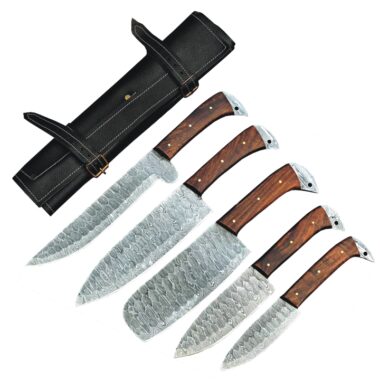
Want these steels in a full set? Our personalized chef knife sets are handmade, engraved with your text and made to order.
Frequently Asked Questions
Still have a question? Contact us — we’re happy to help.
The Bottom Line
A stainless steel ulu knife is the practical, low-maintenance pick. A Damascus ulu knife is the choice for cooks who want a blade with character, a keen edge and real gift appeal — and who don’t mind a minute of care. Either way, a good ulu will change how you chop herbs, vegetables and pizza.
If Damascus sounds like your style, explore our handmade Damascus ulu knives. Every blade comes with a leather sheath, US orders over $49 ship free, and buying two saves you 15%. Want more ideas? See how a mezzaluna pizza cutter handles pizza night, or how to pick the right mezzaluna cutting board.
ABOUT THE AUTHOR
The Huntlux Team
We make and sell handmade Damascus steel ulu knives, each shipped with a leather sheath, and personalized chef knife sets made to order. Our guides come from what we see every day: the questions customers ask before they buy, and how they actually use their ulus for herbs, pizza and everyday meal prep. Huntlux ulu knives are sold here on huntluxstore.com and on Amazon.
Shop this guide: Damascus ulu knife with camel bone handle