What Is a Mezzaluna Pizza Cutter and Why Does It Work So Well?
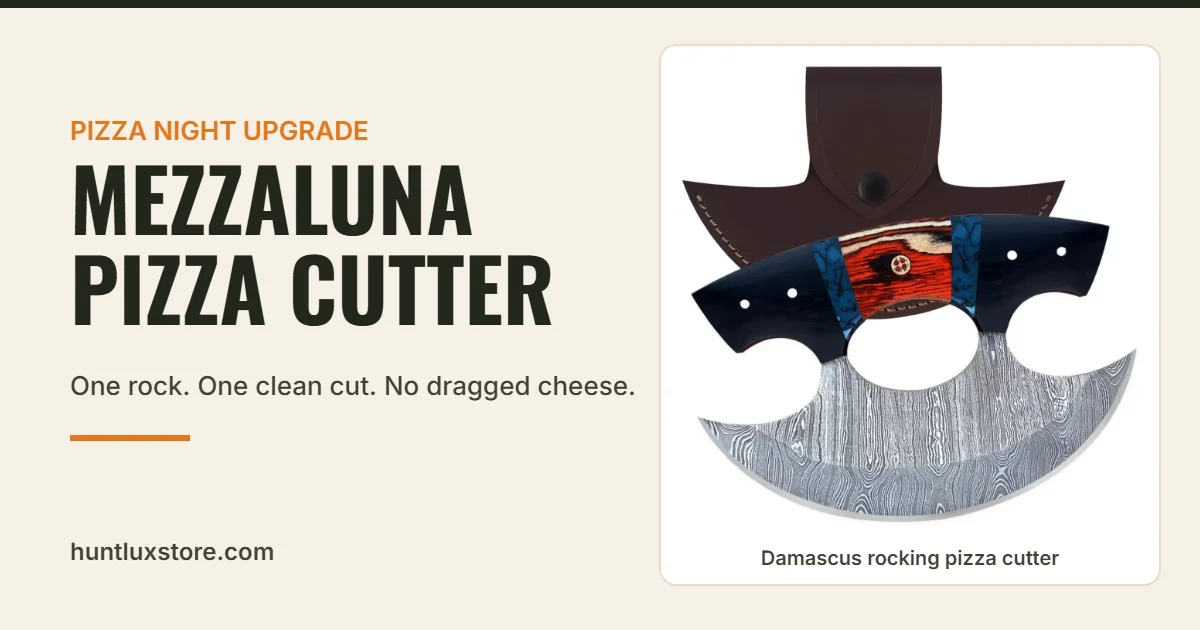
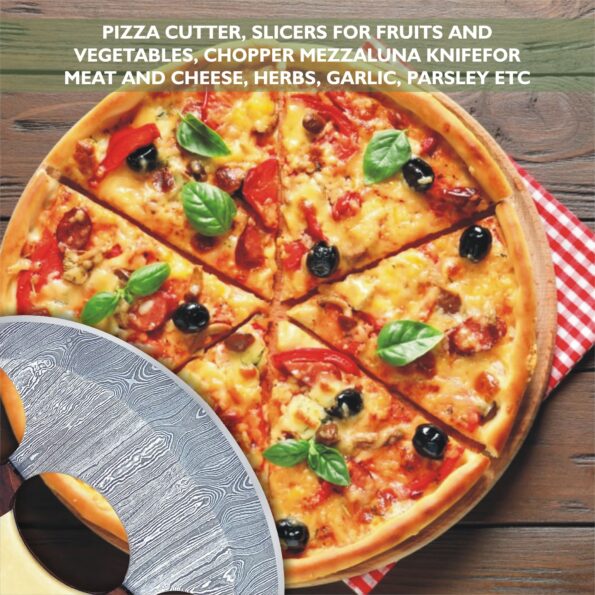
A mezzaluna pizza cutter is a curved, rocking blade that slices through pizza in one smooth pass — no dragging cheese, no crushed toppings, no sawing back and forth. Unlike a pizza wheel that rolls and pushes toppings forward, the mezzaluna’s wide, curved edge presses straight down and rocks across the pie, giving you clean cuts every time. Below, we explain exactly why rocking blades outperform wheels and rollers, what to look for in a quality pizza mezzaluna, and how to use one like a pro.
The Problem with Traditional Pizza Cutters
If you have ever wrestled with a standard pizza wheel, you know the frustration. The small circular blade rolls forward, pushing cheese and toppings along with it. You end up going over the same line two or three times, and the slices still look messy. Roller-style cutters are slightly better because the blade is wider, but they still rely on forward motion that can shift toppings on a loaded pie.
Here is what typically goes wrong with wheels and rollers:
- Cheese dragging — the forward rolling motion pulls melted cheese off the slice and bunches it up ahead of the blade.
- Topping displacement — pepperoni, vegetables, and other toppings slide forward instead of being cut in place.
- Multiple passes needed — a small wheel often does not cut through thick crust in one go, so you press harder and make a bigger mess.
- Uneven pressure — because you push from one side, one half of the pizza gets more force than the other, leading to some slices that are barely cut through.
These problems are not about technique. They are built into the design. A wheel cuts by rolling, which means forward force is always part of the equation. A rocking blade eliminates that forward force entirely.
Why a Mezzaluna Pizza Cutter Rocks (Literally)
The word “mezzaluna” is Italian for “half moon,” and the shape tells you everything about how it works. The curved blade sits flat on your cutting surface, and you rock it from one edge to the other. The downward pressure is distributed evenly across the entire length of the blade, and the rocking motion keeps everything in place.
Downward Force Instead of Forward Force
This is the single biggest advantage. A mezzaluna cuts by pressing down, not by pushing forward. That means cheese stays where it is, toppings stay on their slice, and you get a clean line with one pass.
One Pass, Every Time
Because the blade spans much of the pizza’s width, you only need one or two smooth rocks to cut from edge to edge. No going back over the same line. No sawing. This matters even more when you are cutting hot pizza straight from the oven and want to serve it before the cheese cools and hardens.
Even Pressure Across the Entire Cut
The curve of a mezzaluna blade means that pressure is distributed naturally from one end to the other as you rock. With a wheel, you are concentrating all the force into a single point of contact. With a mezzaluna, the force spreads across inches of blade at once. This is why a rocking blade cuts through thick, doughy crusts and loaded toppings that give a wheel trouble.
Better for Thick and Loaded Pizzas
Deep dish, pan pizza, flatbreads loaded with toppings — these are where the mezzaluna really shines. A pizza wheel struggles with anything beyond a thin crust because the small blade does not have enough leverage. A mezzaluna’s wide, sharp curve handles dough, cheese, and toppings in one confident rock.
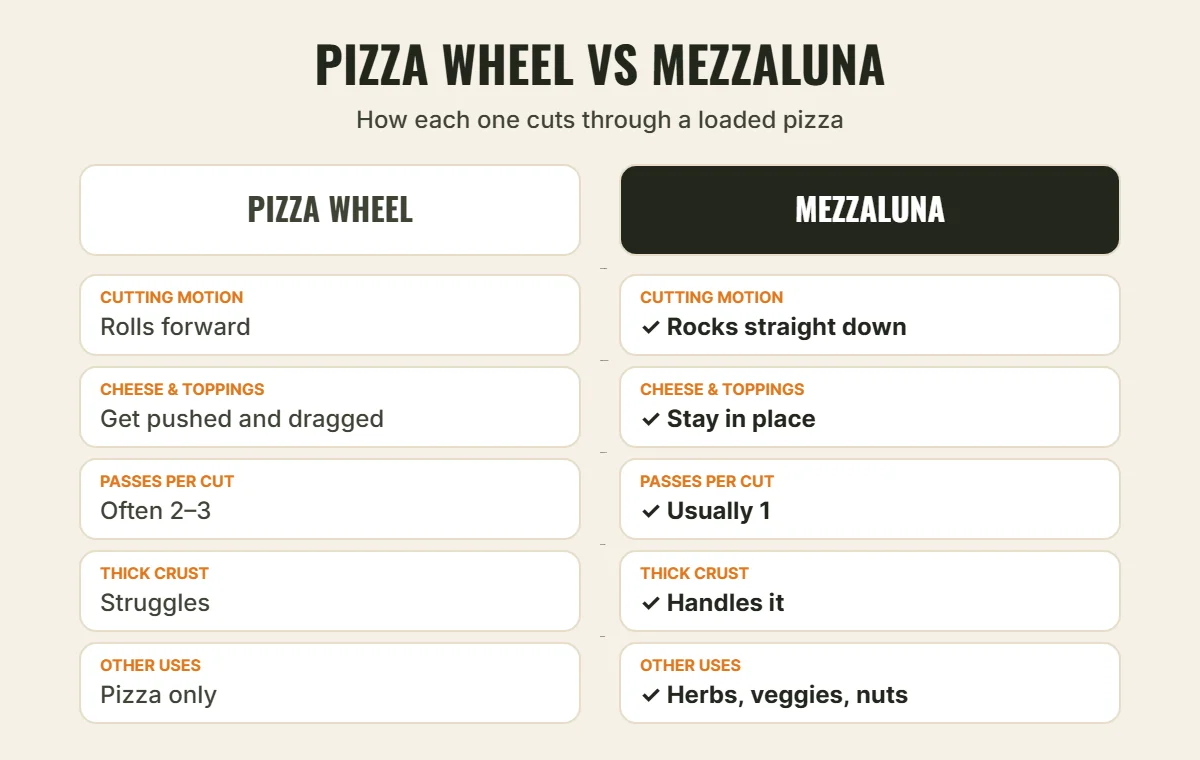
Pizza Cutter Mezzaluna vs. Wheel vs. Scissors: Comparison Table
| Feature | Mezzaluna / Rocking Blade | Pizza Wheel | Pizza Scissors |
|---|---|---|---|
| Cutting motion | Rocking (downward) | Rolling (forward) | Snipping (hand squeeze) |
| Cheese dragging | Minimal to none | Common | Minimal |
| Passes needed | One | Often two or three | Multiple snips per line |
| Thick crust performance | Excellent | Poor to fair | Fair |
| Topping displacement | Very low | High | Low |
| Speed | Fast (one rock per slice) | Moderate | Slow |
| Versatility beyond pizza | High (herbs, vegetables, nuts) | Low (pizza only) | Low (pizza only) |
| Ease of cleaning | Easy (one flat blade) | Moderate (wheel gaps trap food) | Difficult (hinges) |
| Blade sharpening | Easy with a rod | Difficult (small wheel) | Very difficult |
The comparison is clear: for clean, fast, one-pass pizza cutting, a rocking mezzaluna blade wins on nearly every measure. The only advantage a wheel has is compact storage, and even that is a small trade-off for consistently better cuts.
What Makes the Best Pizza Rocker?
Not all rocking pizza cutters are created equal. Here is what separates a great one from a cheap novelty item that ends up in the back of a drawer:
Blade Material
The blade determines sharpness, edge retention, and how the cutter ages. Damascus steel is a premium choice — the layered forging process can create a hard, sharp edge that holds up well over many pizza nights. Stainless steel works too, but typically needs sharpening sooner. Avoid cutters with thin, stamped blades that flex under pressure.
Blade Width
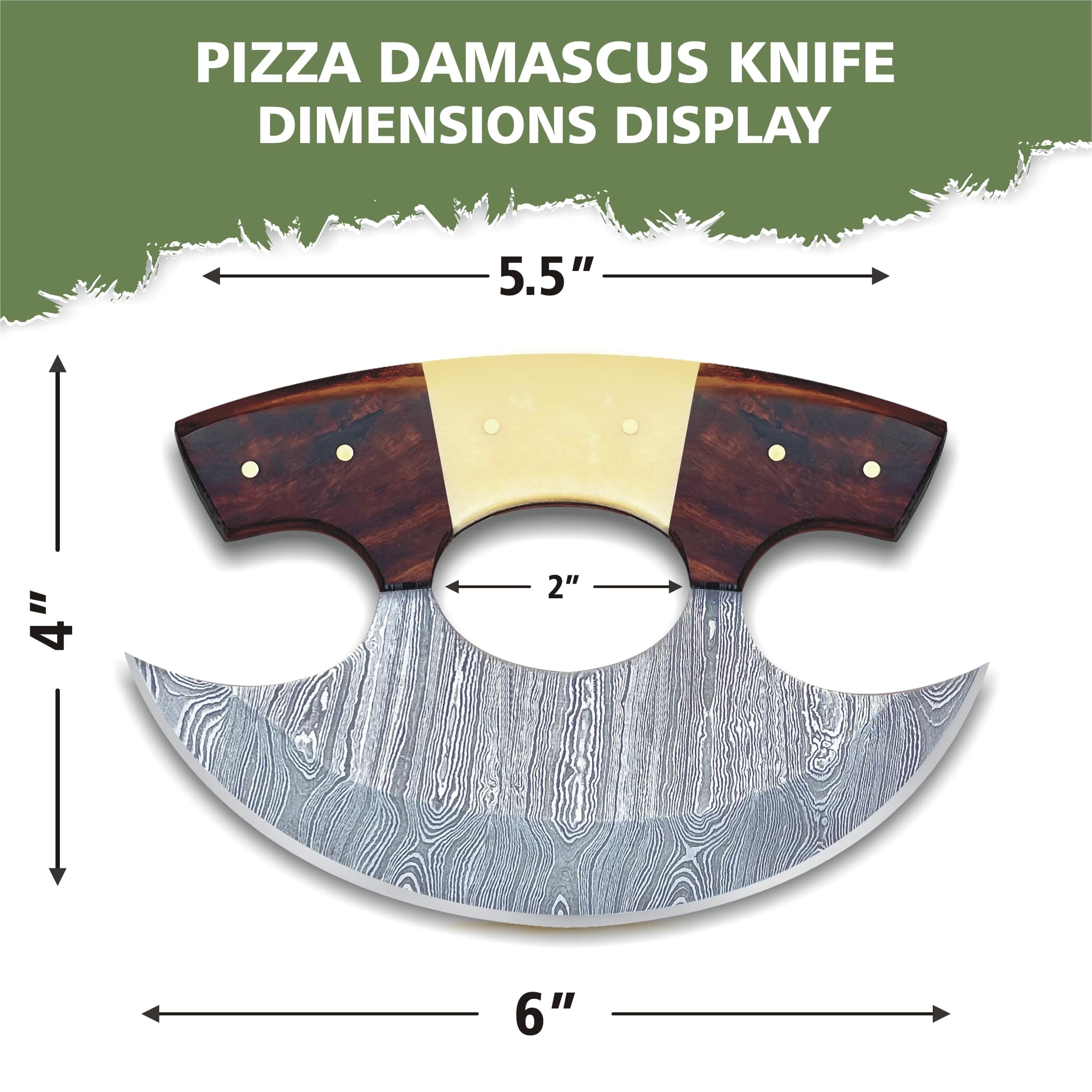
For pizza, you want a blade that is at least six inches wide. This lets you cut across a standard 12-inch pizza in one or two rocks without repositioning. A blade under five inches works for herbs and small tasks but forces you to make multiple passes on a full pie.
Handle Design
On a mezzaluna pizza cutter, the handle sits directly on top of the blade. Your entire hand wraps around it, so comfort matters more here than on a regular knife. Look for handles made from natural materials like wood or a wood-and-resin combination. They offer a warm, non-slip grip — especially important when your hands might be slightly oily from handling pizza dough.
Blade Curve
The curve should be smooth and even from tip to tip. An inconsistent curve creates dead spots where the blade does not make contact with the cutting surface. When you rock the blade, every point should touch the board. This is what gives you that seamless, edge-to-edge cut.
Sheath Included
A sharp rocking blade needs proper storage. A leather sheath protects the edge and keeps it safely tucked away in a drawer between uses. If a pizza cutter does not come with a sheath, you will need to figure out storage on your own — and an exposed blade in a utensil drawer is a recipe for dulling and accidents.
Beyond Pizza: What Else Can a Mezzaluna Cut?
One of the best things about a mezzaluna pizza cutter is that it does not just cut pizza. The same rocking motion that slices through a pie works beautifully on a whole range of kitchen tasks:
- Fresh herbs — basil, parsley, cilantro, rosemary. The rocking motion minces herbs quickly without bruising them the way repeated chopping with a flat blade can.
- Garlic and shallots — rock through a few cloves in seconds.
- Nuts — walnuts, pecans, almonds. The wide blade keeps pieces from scattering.
- Flatbreads and quesadillas — anything flat that needs a clean cut without dragging.
- Brownies and bar cookies — the curved blade presses straight down through dense, sticky baked goods without pulling them apart.
- Salad chopping — load up a bowl with greens and toppings, then rock the blade through for a chopped salad in under a minute.
This versatility is what makes a mezzaluna a genuine kitchen tool rather than a single-purpose gadget. Many people buy one for pizza and then find themselves reaching for it every day. For a deeper look at all the ways you can use a rocking blade, check out our ulu knife guide.
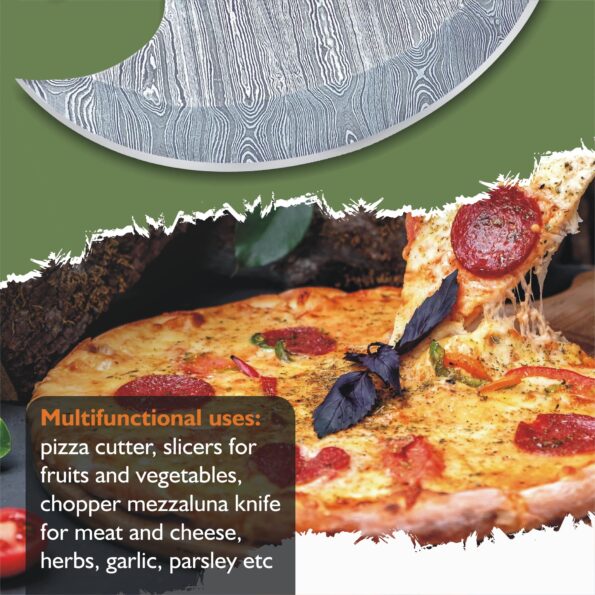
Our Top Picks: Mezzaluna Pizza Cutters Worth Buying
If you are ready to upgrade from a pizza wheel, here are three options that deliver on everything we have talked about — sharp Damascus steel, comfortable handles, and a smooth rocking curve.
Best for Pizza Night
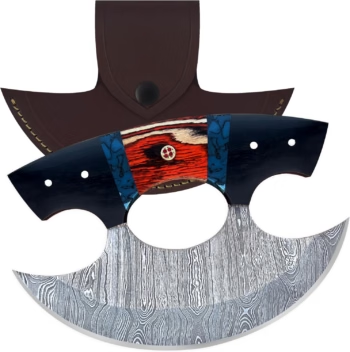
This rocking pizza cutter was made with pizza in mind. The wide Damascus steel blade rocks smoothly across the pie, and the resin-and-wood handle provides a secure grip even with greasy hands. It works well on a cutting board for clean, edge-to-edge cuts. Comes with a leather sheath.
- Ulu Rocking Pizza Cutter – 6″ Damascus Steel Ulu Knife with Sheath, Resin & Wood Handle Original price was: $54.95.$32.70Current price is: $32.70.
- Rocking pizza cutter and ulu knife in one – 6″ Damascus steel blade
- Slices pizza in a single rocking motion, no dragged toppings
- Resin & wood handle with leather sheath
BUY 2 ULU KNIVES, SAVE 15% – mix any styles, discount applies in cart.✈Free US Shipping
On orders $49+, otherwise $7.99↺14-Day Returns
Unused, with sheath & packaging✓Leather Sheath Included
Safe storage for the blade✉Questions?
Contact us – we reply fast
Buy 2 ulu knives, save 15%.
Best Compact Mezzaluna for Pizza and Herbs
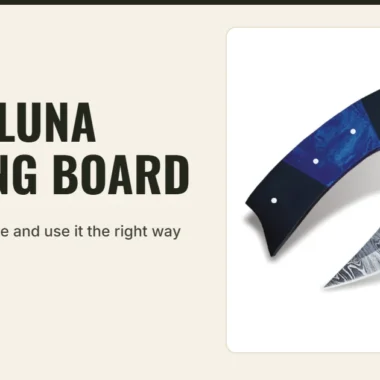
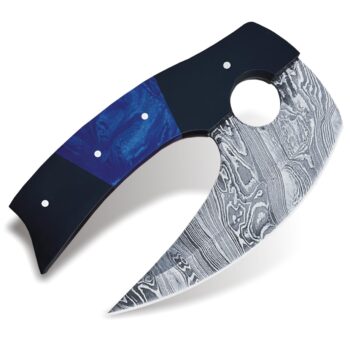
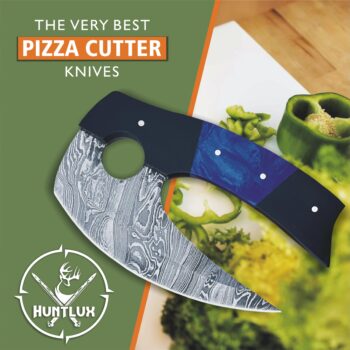
If you want a mezzaluna that handles pizza slicing and doubles as your go-to herb chopper, this 5.4-inch Damascus blade hits the sweet spot. The blue-and-black resin handle is moisture resistant and easy to grip. Slightly smaller than a dedicated pizza rocker, it is incredibly versatile for everyday kitchen tasks beyond pizza night. Comes with a leather sheath.
- Damascus Mezzaluna Ulu Knife – 5.4″ Rocking Herb Chopper with Sheath, Blue & Black Resin Handle Original price was: $64.50.$34.50Current price is: $34.50.
- Mezzaluna-style ulu knife with a 5.4″ Damascus steel blade
- Minces herbs, garlic and veggies fast with a rocking motion
- Blue & black resin handle with leather sheath
BUY 2 ULU KNIVES, SAVE 15% – mix any styles, discount applies in cart.✈Free US Shipping
On orders $49+, otherwise $7.99↺14-Day Returns
Unused, with sheath & packaging✓Leather Sheath Included
Safe storage for the blade✉Questions?
Contact us – we reply fast
Buy 2 ulu knives, save 15%.
Best Gift Option
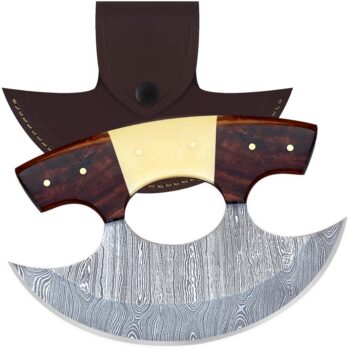
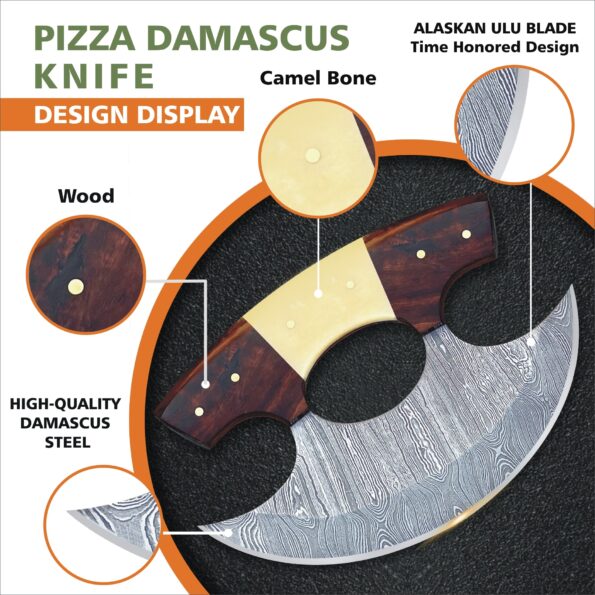
Know someone who takes their pizza seriously? A Damascus ulu with a camel bone and wood handle is the kind of gift that gets a reaction. The one-of-a-kind Damascus pattern on the blade combined with the premium handle makes it a display-worthy piece that also performs beautifully as a pizza cutter and kitchen rocker. Comes with a leather sheath.
- Damascus Ulu Knife with Sheath – 6″ Alaskan-Style Kitchen Chopper, Camel Bone & Wood Handle Original price was: $59.95.$29.99Current price is: $29.99.
- 6″ Damascus steel ulu blade with a natural camel bone & wood handle
- Rocking cut for pizza, herbs, vegetables and cooked meat
- Comes with a leather sheath – ready to gift
BUY 2 ULU KNIVES, SAVE 15% – mix any styles, discount applies in cart.✈Free US Shipping
On orders $49+, otherwise $7.99↺14-Day Returns
Unused, with sheath & packaging✓Leather Sheath Included
Safe storage for the blade✉Questions?
Contact us – we reply fast
Buy 2 ulu knives, save 15%.
How to Use a Pizza Mezzaluna: Step by Step
Using a mezzaluna for pizza is straightforward, but a few tips will help you get perfect cuts from the start:
- Let the pizza cool for two minutes — not long enough to get cold, but enough for the cheese to set slightly. This makes the cheese less stretchy and reduces any chance of dragging, even with a rocking blade.
- Place the blade at the center of the pizza — position the middle of the curved edge right across the diameter you want to cut.
- Press down gently and rock — apply moderate downward pressure and rock the blade from one side to the other in a single, smooth motion. Let the curve and the blade’s weight do the work.
- Lift and rotate — lift the blade straight up (do not slide it), rotate the pizza or reposition the blade for your next cut, and rock again.
- For thick crust — use a bit more downward pressure and keep the rocking motion slow and steady. The blade should do the cutting, not your arm strength.
Most people get the hang of it on their first pizza. The motion feels natural — almost like rocking a cradle — and the results speak for themselves.
Pro Tips for Better Pizza Cuts
- Use a flat cutting surface — a wooden or plastic cutting board works best. Avoid cutting directly on a metal pan, which can dull the blade.
- Cut with confidence — hesitant, light rocking leaves you with partial cuts. One firm, smooth rock is better than three timid ones.
- Clean immediately after use — pizza cheese and sauce can harden quickly. A quick hand wash with warm water and mild soap right after cutting keeps the blade in top shape. Never put a Damascus steel blade in the dishwasher.
- Dry and store in the sheath — towel dry the blade immediately and slip it into its leather sheath. This protects the edge and prevents moisture from sitting on the steel.
For complete care instructions — including oiling, rust prevention, and sharpening a curved blade — visit our ulu knife care and sharpening guide.
Choosing the Right Size Mezzaluna for Pizza
Mezzaluna blades come in various sizes. For pizza specifically, size matters because the blade needs to span most of the pie’s diameter in a single pass.
- 6 inches and up — ideal for standard and large pizzas (10–14 inches). Two to three rocks and you have a full pie sliced into eight pieces. This is the size most pizza lovers should start with.
- 5–6 inches — works for personal-size pizzas (8–10 inches) and doubles as an excellent herb and vegetable chopper for daily kitchen use.
- Under 5 inches — too small for full pizzas but perfect as a compact bar tool, mini flatbread cutter, or herb mincer.
If pizza is your main use case, go with six inches or larger. If you want a versatile kitchen tool that also handles pizza, a 5- to 6-inch mezzaluna is the sweet spot. Browse the full range of sizes in our ulu knife collection.
Caring for Your Mezzaluna Pizza Cutter
A quality mezzaluna will last for years with basic care. Here is the quick version:
- Hand wash only — warm water, mild soap, dry immediately. Never dishwasher.
- Oil the blade — a thin coat of food-safe mineral oil every few weeks keeps Damascus steel protected.
- Store in the sheath — protects the edge and keeps it safe in a drawer.
- Sharpen with a rod — a curved blade sharpens best on a honing rod. Roll the blade along the rod following the natural curve.
A well-made Damascus blade can hold a sharp edge for a long time, but it does need occasional oiling to prevent surface oxidation. For the full care routine, including step-by-step sharpening instructions, see our complete ulu knife guide.
Frequently Asked Questions
Still have a question? Contact us — we’re happy to help.
Ready to Upgrade Your Pizza Game?
Once you switch from a pizza wheel to a mezzaluna, there is no going back. The cuts are cleaner, the process is faster, and you actually look forward to slicing instead of dreading the mess. Plus, you get a tool that does double duty for herbs, vegetables, and everything else you chop on a daily basis.
Browse handmade Damascus steel mezzaluna and ulu knives at Huntlux. Every blade comes with a leather sheath and ships free in the US on orders over $49. And when you pick up two, you save 15% automatically — one for pizza night, one for everyday cooking.
Want help choosing? Take a look at our ulu knife buyer’s guide for a side-by-side comparison of blade sizes, handle materials, and which knife fits your kitchen best.
ABOUT THE AUTHOR
The Huntlux Team
We make and sell handmade Damascus steel ulu knives, each shipped with a leather sheath, and personalized chef knife sets made to order. Our guides come from what we see every day: the questions customers ask before they buy, and how they actually use their ulus for herbs, pizza and everyday meal prep. Huntlux ulu knives are sold here on huntluxstore.com and on Amazon.
Shop this guide: ulu rocking pizza cutter