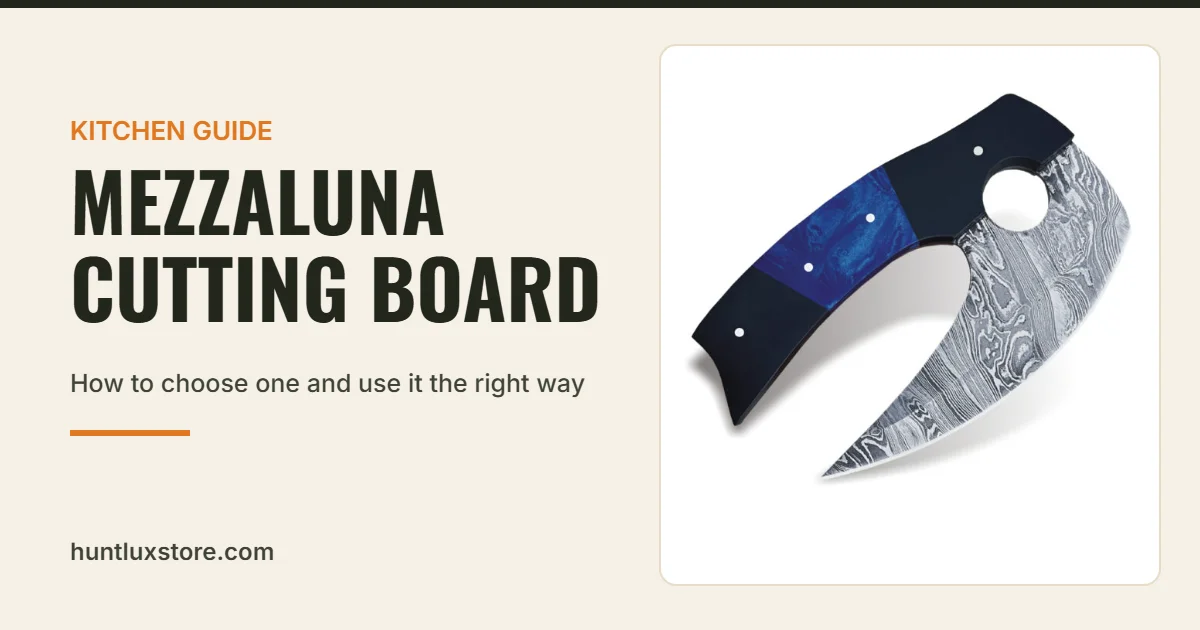
What Is a Mezzaluna Cutting Board?
A mezzaluna cutting board is a board that suits a rocking, half-moon blade: it is flat or gently dished, made from a knife-friendly material like hardwood, and big enough for the blade to rock end to end. Many come with a shallow bowl that keeps herbs and garlic in one place while you chop. The right board protects your edge, keeps food contained, and makes rocking faster and safer.
In this guide we cover the two main board styles, the best materials for a curved blade, the size to buy, how to use a mezzaluna with a board, and how to care for both. If you are still choosing a blade, our ulu knife buyer’s guide walks through blade steel, handle and size.
Why a Mezzaluna Needs the Right Board
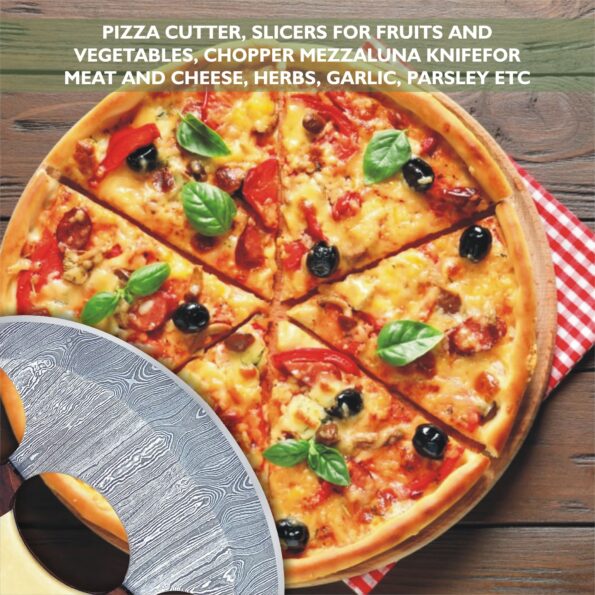
A mezzaluna does not slice the way a chef’s knife does. It rocks. The whole curved edge rolls across the surface, touching the board at a moving point from one end to the other. That means the board takes more edge contact per cut than it would with a straight knife, and the board’s surface directly affects how sharp your blade stays and how well the rocking motion works.
Three things matter most:
- Edge protection — a board that is too hard (glass, stone, metal) dulls a blade quickly. A board with a little give lets the edge sink in slightly instead of grinding against it.
- Stability — rocking puts side-to-side pressure on the board. A light or slippery board slides around, which is annoying and unsafe.
- Containment — rocking pushes small pieces outward. A board with a bowl or a groove keeps herbs, garlic and nuts where you want them.
Get these three right and a mezzaluna becomes one of the fastest tools in your kitchen. Get them wrong and you will fight the board every time you chop.
Two Styles of Mezzaluna Cutting Board
When people search for a mezzaluna with board, they usually find two designs. Both work; they just suit different jobs.
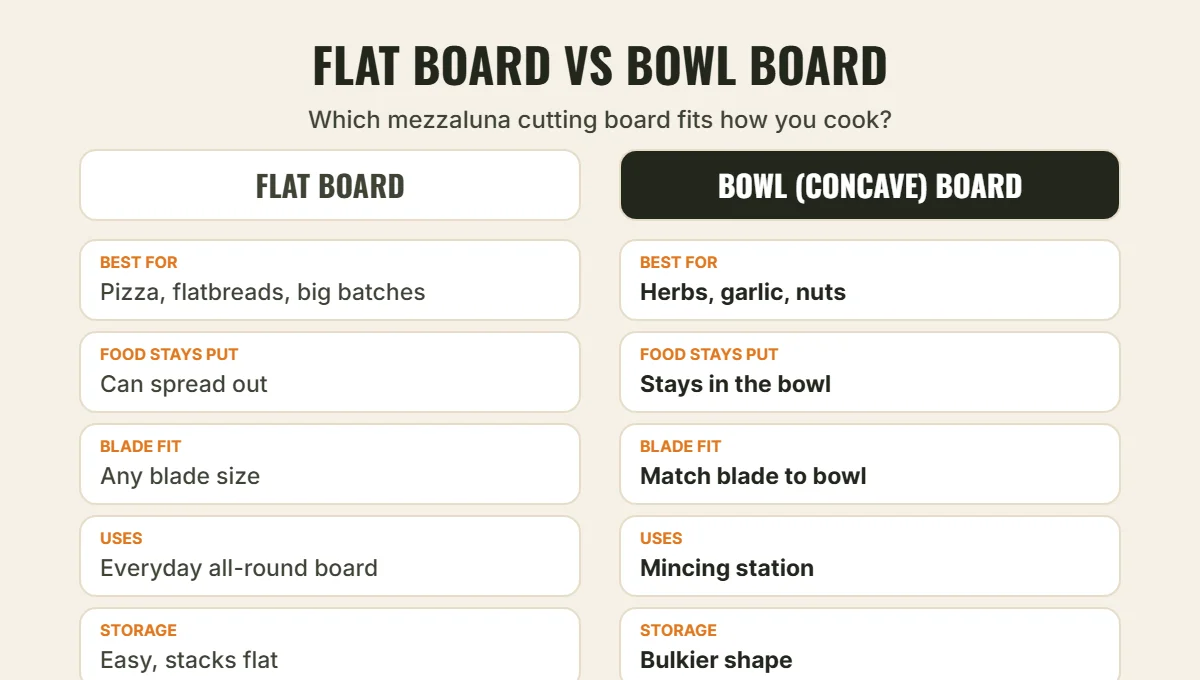
1. The Flat Board
A flat board is exactly what it sounds like: a standard, level cutting surface. A rocking blade works on a flat board as long as the curve of the blade touches the board along its full length. Flat boards are the most versatile option because they handle everything — pizza, flatbreads, large batches of vegetables, herbs and general meal prep.
Pros: works with any blade size, easy to clean, stacks and stores easily, and you probably already own one.
Cons: small, light ingredients like herbs and garlic can spread out as you rock, so you will gather them back into a pile now and then.
2. The Bowl (Concave) Board
A bowl board has a shallow, rounded hollow carved into the surface. The idea is simple: food collects at the bottom of the bowl, and the curved blade rocks inside it. This is the classic herb-chopping setup and it is the board most people picture when they hear “mezzaluna chopping board.”
Pros: herbs, garlic, nuts and onions stay contained, so mincing is fast and tidy. It doubles as a small serving piece.
Cons: it is a specialist board. The bowl limits how much you can cut, it does not work for pizza or large items, and the blade’s curve should roughly match the bowl’s curve. A blade that is much flatter or much more curved than the bowl will only touch in one spot.
Which Style Should You Choose?
If you only buy one board, buy a good flat board. It covers every task, including pizza night, and a mezzaluna works well on it. If you chop fresh herbs often — pesto, gremolata, chimichurri, garnishes — a small bowl board is a nice second piece. Plenty of cooks own both: a large flat board for everyday prep and a small bowl board that lives next to the stove for herbs.
Best Materials for a Mezzaluna Cutting Board
Material matters more than shape. Here is how the common options compare for a rocking blade.
| Material | Kind to the Edge | Stability | Care | Verdict |
|---|---|---|---|---|
| Hardwood (maple, walnut, cherry) | Very good | Heavy, stays put | Hand wash, oil now and then | Best all-round choice |
| End-grain wood | Excellent | Very heavy, very stable | Hand wash, oil regularly | Premium choice for heavy use |
| Bamboo | Fair (harder surface) | Light to medium | Hand wash, oil now and then | Budget option, a bit tougher on edges |
| Plastic / polyethylene | Good | Light, can slide | Easy, some are dishwasher safe | Practical second board |
| Glass, marble, slate | Poor | Heavy but slippery | Easy | Avoid for cutting |
Hardwood: The Best Match
Dense hardwoods such as maple, walnut and cherry are the classic pairing for a mezzaluna. They are firm enough to give a clean cut but soft enough to be gentle on the edge. They are also heavy, so they stay put while you rock. A thick hardwood board will last for years with basic care.
End-Grain vs Edge-Grain
Edge-grain boards show long strips of wood on the surface. End-grain boards are made from the ends of the wood fibers, arranged like a checkerboard. End-grain is the most forgiving surface for any knife because the blade slips between the fibers rather than cutting across them. It is heavier and costs more, but if you rock a blade every day, it is worth considering.
Bamboo and Plastic
Bamboo is affordable and looks good, but it is a harder surface, so it is a little tougher on a fine edge. Plastic boards are kind to edges and easy to sanitize, which makes them a smart choice for raw meat. Their weakness is weight: a thin plastic board slides around during rocking. Put a damp towel or a non-slip mat underneath and the problem goes away.
What to Avoid
Glass, marble, granite and slate look elegant and are great for serving, but they are far too hard for cutting. Every rock grinds the edge against stone or glass and dulls it quickly. The same goes for cutting directly on metal pans or ceramic plates. Use these surfaces for presentation only.
What Size Mezzaluna Cutting Board Do You Need?
The board should be longer than your blade with room to spare. A simple rule: the cutting area should be at least twice the width of your blade. That gives the blade space to rock fully and gives you room to push finished food to one side.
- Small blade (around 4–5 inches): a board of roughly 10 x 8 inches, or a small bowl board, works well for herbs, garlic and small jobs.
- Mid-size blade (around 5–6 inches): a board of roughly 14 x 10 inches is comfortable for everyday prep.
- Large blade (6 inches and up): a board of 16 x 12 inches or larger, especially if you cut pizza or big batches of vegetables.
Thickness matters too. A board that is at least an inch thick (about 2.5 cm) is heavy enough to stay still while you rock and is less likely to warp over time.
A board with a juice groove around the edge is handy if you cut tomatoes, fruit or cooked meat. For herb work, a groove is not needed.
How to Use a Mezzaluna on a Cutting Board
Using a mezzaluna on a board is quick to learn. Follow these steps for clean, safe results.
- Stabilize the board — place a damp towel or a non-slip mat under the board so it cannot slide.
- Pile the food in the center — gather herbs, garlic or vegetables into a loose mound in the middle of the board (or in the bowl).
- Grip the handle from the top — on a single-handle ulu-style mezzaluna, wrap your hand around the top handle. On a double-handle mezzaluna, hold one handle in each hand.
- Rock, don’t lift — keep the blade in contact with the board and rock it from end to end. Let the curve do the work. There is no need to lift it high or chop downward.
- Turn and repeat — after a few rocks, rotate your angle by about 90 degrees and rock again. Turning the direction gives you an even mince.
- Gather and finish — use the flat of the blade to scoop the pile back to the center, then rock a few more times until it is as fine as you like.
Keep your free hand clear of the blade. With a single-handle ulu, your free hand can hold the board steady at the far edge. With a double-handle mezzaluna, both hands are on the handles, which keeps fingers away from the edge by design.
Tips for Herbs, Garlic and Nuts
- Herbs: make sure herbs are completely dry before chopping. Wet herbs stick to the blade and turn mushy. Strip leaves from woody stems first.
- Garlic: crush the cloves lightly under the flat of the blade first, then rock. You will get a fine mince in seconds.
- Nuts: a bowl board shines here because nuts tend to scatter. Rock slowly with light pressure for an even, coarse chop.
- Onions and shallots: halve and slice them first, then rock across the slices to dice.
Choosing a Mezzaluna to Pair With Your Board
The board is only half the setup. The blade matters just as much. For board work, look for a blade with a smooth, even curve so every part of the edge meets the surface as you rock, a comfortable handle that gives you control, and a sheath so the edge is protected when you are done. Here are three picks that pair well with a hardwood board.
Best for Herbs and a Bowl Board
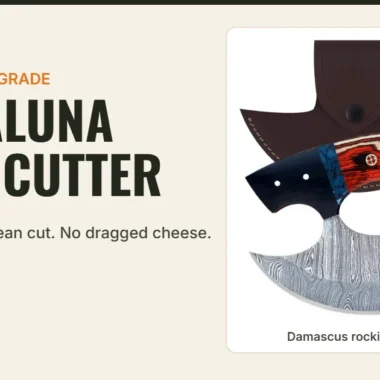
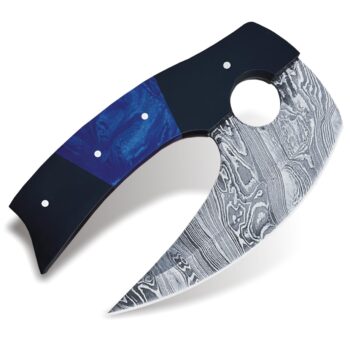
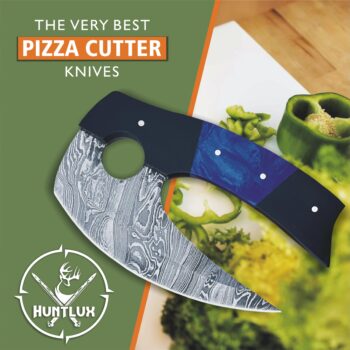
This 5.4-inch Damascus mezzaluna ulu is a great match for herb chopping and smaller boards. Its compact size is easy to control in a bowl or on a mid-size flat board, and the blue-and-black resin handle is easy to grip. It comes with a leather sheath to protect the edge between uses.
- Damascus Mezzaluna Ulu Knife – 5.4″ Rocking Herb Chopper with Sheath, Blue & Black Resin Handle Original price was: $64.50.$34.50Current price is: $34.50.
- Mezzaluna-style ulu knife with a 5.4″ Damascus steel blade
- Minces herbs, garlic and veggies fast with a rocking motion
- Blue & black resin handle with leather sheath
BUY 2 ULU KNIVES, SAVE 15% – mix any styles, discount applies in cart.✈Free US Shipping
On orders $49+, otherwise $7.99↺14-Day Returns
Unused, with sheath & packaging✓Leather Sheath Included
Safe storage for the blade✉Questions?
Contact us – we reply fast
Buy 2 ulu knives, save 15%.
Best All-Round Ulu for a Flat Board
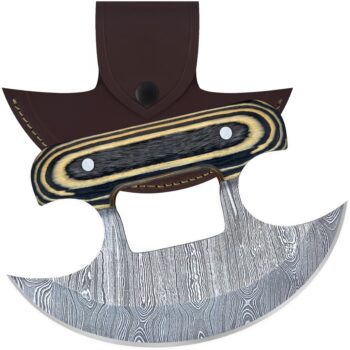
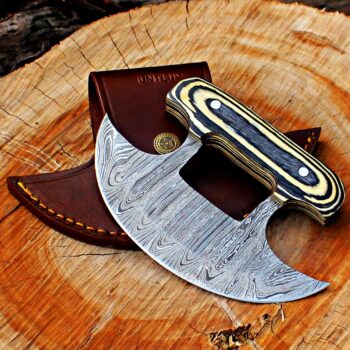
A 6-inch Damascus ulu covers almost every board task: herbs, vegetables, flatbreads and pizza. This one has a multicolor wood handle with a warm, natural feel and comes with a leather sheath.
- Ulu Knife with Leather Sheath – 6″ Damascus Steel Kitchen Chopper, Multicolor Wood Handle Original price was: $54.95.$32.70Current price is: $32.70.
- Ulu knife with leather sheath and a 6″ Damascus steel blade
- Colorful multicolor wood handle – no two are alike
- Made for pizza night, herbs and everyday meal prep
BUY 2 ULU KNIVES, SAVE 15% – mix any styles, discount applies in cart.✈Free US Shipping
On orders $49+, otherwise $7.99↺14-Day Returns
Unused, with sheath & packaging✓Leather Sheath Included
Safe storage for the blade✉Questions?
Contact us – we reply fast
Buy 2 ulu knives, save 15%.
Best Gift Set-Up
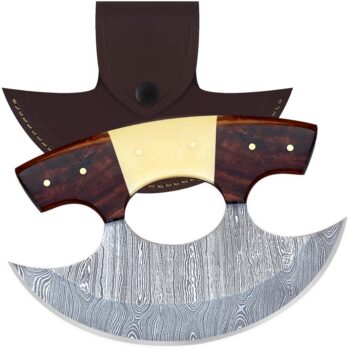
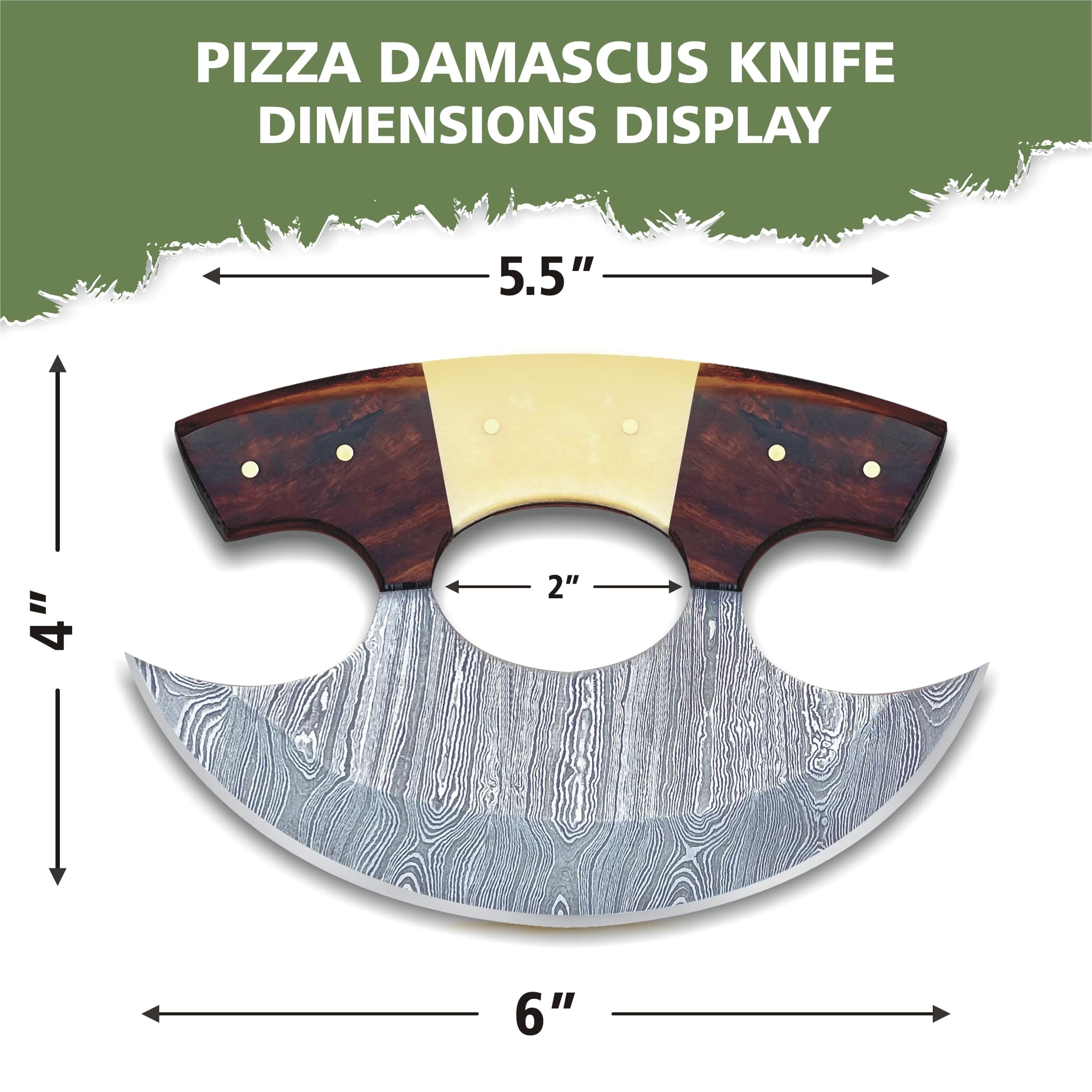
Pair a good hardwood board with this 6-inch Damascus ulu with a camel bone and wood handle, and you have a gift any home cook will use. Every Damascus pattern is one of a kind, and the leather sheath makes it ready to give.
- Damascus Ulu Knife with Sheath – 6″ Alaskan-Style Kitchen Chopper, Camel Bone & Wood Handle Original price was: $59.95.$29.99Current price is: $29.99.
- 6″ Damascus steel ulu blade with a natural camel bone & wood handle
- Rocking cut for pizza, herbs, vegetables and cooked meat
- Comes with a leather sheath – ready to gift
BUY 2 ULU KNIVES, SAVE 15% – mix any styles, discount applies in cart.✈Free US Shipping
On orders $49+, otherwise $7.99↺14-Day Returns
Unused, with sheath & packaging✓Leather Sheath Included
Safe storage for the blade✉Questions?
Contact us – we reply fast
Buy 2 ulu knives, save 15%.
Not sure which size suits you? Browse the full ulu knife collection to compare blade sizes and handles side by side.
Caring for Your Mezzaluna Cutting Board
A good wooden board can last for many years. A few simple habits keep it clean, flat and crack-free.
Cleaning
- Scrape off food, then wash with warm water and mild soap. Rinse and dry right away.
- Never soak a wooden board or put it in the dishwasher. Standing water and dishwasher heat cause warping and cracks.
- Dry the board standing on its edge so air reaches both sides evenly.
- For odors, rub the surface with coarse salt and half a lemon, then rinse and dry.
Oiling
- Rub in a thin coat of food-safe mineral oil or a board cream when the wood looks dry or pale.
- Let it soak in for a few hours or overnight, then wipe off the excess.
- New boards benefit from a few coats in the first weeks; after that, oiling once a month or so is plenty for most kitchens.
Separate Boards for Raw Meat
Keep one board for raw meat, poultry and fish, and another for herbs, vegetables, bread and cooked food. A plastic board is a practical choice for raw proteins because it is easy to sanitize. Your wooden mezzaluna board can then stay dedicated to herbs and produce.
Caring for the Blade, Too
Your mezzaluna will stay sharp much longer on a proper board, but it still needs basic care. Hand wash the blade, dry it immediately, and store it in its sheath. A Damascus blade benefits from an occasional thin coat of food-safe oil. For full cleaning, oiling and sharpening steps for curved blades, see our ulu knife guide.
Common Mistakes to Avoid
- Cutting on a plate or serving platter: ceramic and stone surfaces dull the edge fast.
- Using a board that slides: always add a damp towel or a mat underneath light boards.
- Chopping wet herbs: dry them first for a clean, fluffy mince.
- Mismatched bowl and blade: on a bowl board, a blade with a very different curve touches in only one spot and cuts poorly.
- Pressing too hard: a sharp mezzaluna needs light, steady rocking, not force. Heavy pressure tires your hand and wears the board faster.
- Leaving the board wet: water left on wood is the main cause of cracks and warping.
Mezzaluna Cutting Board Checklist
- Hardwood (maple, walnut or cherry) or end-grain for the best edge protection
- Flat board for all-round use; bowl board if you chop herbs often
- At least twice the width of your blade, and around an inch thick
- Heavy or anchored with a non-slip mat so it never slides
- Hand wash, dry on edge, oil when it looks dry
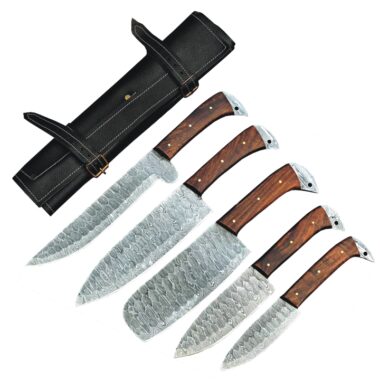
Setting up a full knife station? Our personalized chef knife sets are handmade, engraved with your text and made to order.
Frequently Asked Questions
Still have a question? Contact us — we’re happy to help.
Set Up Your Perfect Mezzaluna Station
A good board and a sharp rocking blade turn chopping into one of the quickest jobs in the kitchen. Start with a thick hardwood board, add a bowl board if you love fresh herbs, and keep everything dry and oiled. The result is faster prep, a sharper edge for longer, and a setup you will reach for every day.
Ready to pair your board with a blade? Explore handmade Damascus mezzaluna and ulu knives at Huntlux. Every knife comes with a leather sheath, US orders over $49 ship free, and when you buy two, you save 15%. Planning pizza night too? Read why a mezzaluna pizza cutter beats a wheel.
ABOUT THE AUTHOR
The Huntlux Team
We make and sell handmade Damascus steel ulu knives, each shipped with a leather sheath, and personalized chef knife sets made to order. Our guides come from what we see every day: the questions customers ask before they buy, and how they actually use their ulus for herbs, pizza and everyday meal prep. Huntlux ulu knives are sold here on huntluxstore.com and on Amazon.
Shop this guide: mezzaluna ulu knife