What Is an Alaska Ulu?
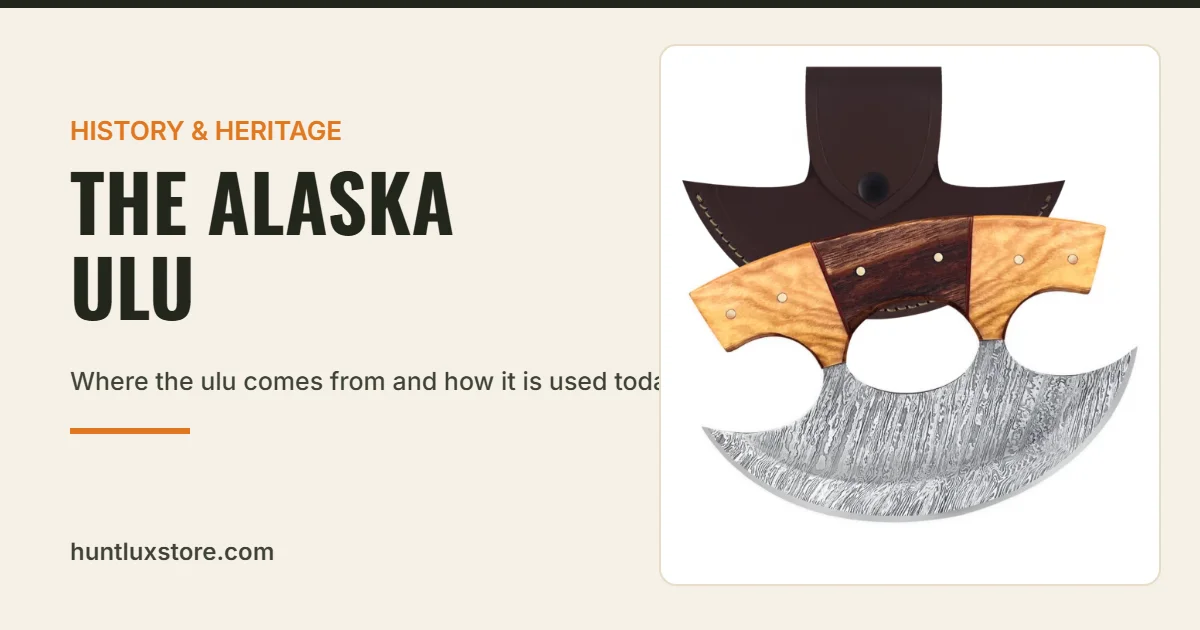
An Alaska ulu is a traditional curved knife created by the Indigenous peoples of the Arctic, including Iñupiat, Yupik and other Alaska Native communities. It has a wide half-moon blade with the handle centered on top, and it cuts with a rocking motion. Used for thousands of years for preparing food and materials, the ulu is still a cherished everyday tool — and a popular kitchen knife far beyond Alaska.
In this article we look at where the Alaska ulu comes from, how traditional ulus were made and used, what the ulu means to the communities who created it, and how the same design became one of today’s favorite kitchen tools. We also explain how to tell a genuine Alaska Native-made ulu from an Alaskan-style kitchen ulu, so you can buy with respect and clarity.

Where the Ulu Comes From
The ulu is one of the oldest known tool designs in the Arctic. Archaeological finds show ulu-style blades across a vast region — from Alaska across northern Canada to Greenland — used by Inuit, Iñupiat, Yupik and related peoples over thousands of years. The word “ulu” comes from Inuit languages and is commonly translated as “woman’s knife,” because it has traditionally been an essential tool for women’s work in the home.
The design suited Arctic life perfectly. Food had to be prepared quickly and efficiently in a harsh climate, often in cold conditions where a strong, controlled cut mattered. The ulu’s shape puts the hand directly above the blade, so pressure goes straight down with little effort and great control.
How Traditional Ulus Were Made
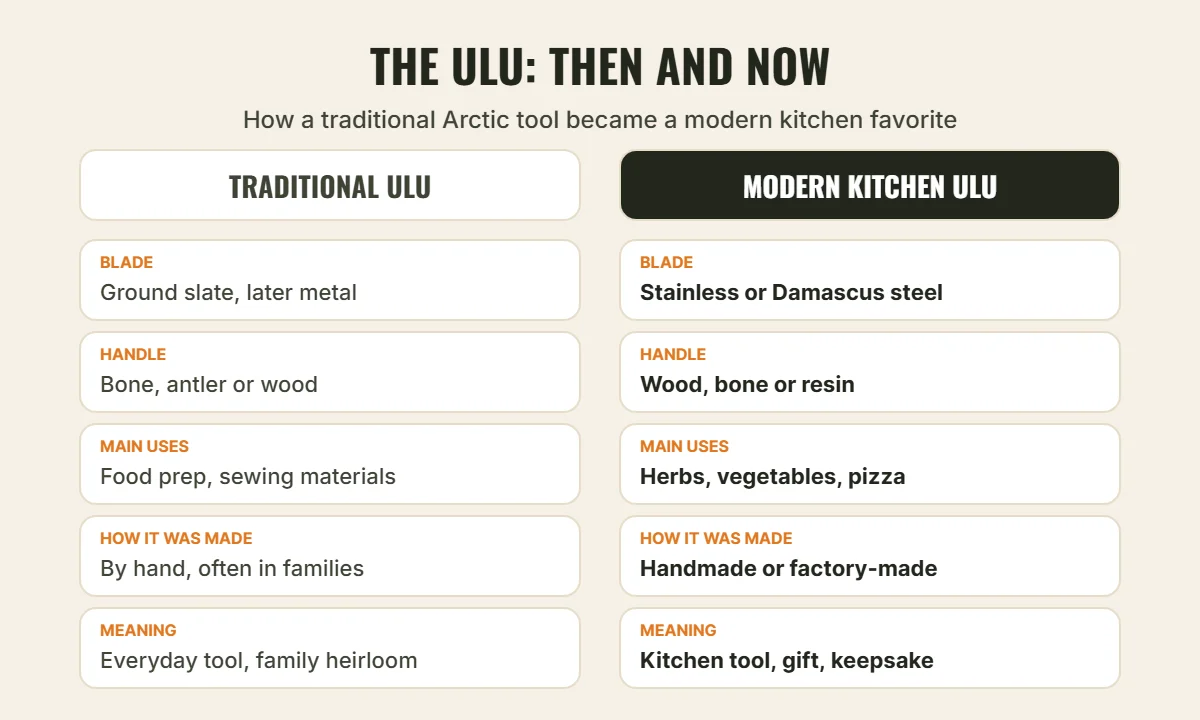
Early ulu blades were often ground from slate, a stone that can be shaped and sharpened to a fine edge. Over time, as metal became available through trade, metal blades replaced stone. Handles were carved from local materials such as bone, antler, ivory or wood, and fitted to the blade either through a center post or along the top of the blade.
Ulus were made in many sizes. Small ulus were used for fine, delicate work, while larger ones handled heavy cutting. Families often had several, each suited to a different task, and the shape of the handle and blade could vary from region to region and maker to maker.
Traditional Uses of the Ulu
The ulu was a true all-purpose tool in the home. Traditional uses included:
- Preparing food — cutting fish, meat and other foods for cooking, drying and sharing.
- Working with materials — trimming and shaping materials for clothing, boots and household items.
- Cutting snow and ice — some larger ulus were used to shape blocks of snow.
- Everyday household tasks — from trimming to cleaning, the ulu was the go-to knife.
Because it was so central to daily life, an ulu was often a personal and treasured possession. Ulus were frequently passed down from mother to daughter, carrying family history with them.
The Ulu’s Cultural Meaning
For many Alaska Native families, the ulu is much more than a cutting tool. It represents skill, self-reliance and the knowledge passed between generations. Giving a young woman her first ulu has long been a meaningful moment in some communities, and many ulus are kept for decades as heirlooms.
Today, Alaska Native artists continue to make traditional ulus with handles of local materials, and these pieces are valued as cultural art as well as working tools. If you want a piece of that tradition, buying directly from Alaska Native artists is the best way to support them and their communities.
Alaska Native-Made vs Alaskan-Style Ulus
It is important to know the difference when you shop:
- Alaska Native-made ulus are crafted by Alaska Native artists. These pieces carry cultural significance and are often sold through Native-owned shops, cultural centers and art markets. Look for clear information about the artist and the community.
- Alaskan-style ulus use the same classic shape for everyday kitchen use. They are made by many makers around the world, in many materials.
Both have a place. Just make sure the description is clear about which one you are buying. Huntlux ulus are Alaskan-style kitchen ulus: handmade Damascus steel blades inspired by the traditional design, made for modern home cooking. We do not describe them as Alaska Native-made.
How the Ulu Became a Kitchen Favorite
Visitors to Alaska have long brought ulus home as useful souvenirs, and many discovered how well the rocking blade works in an ordinary kitchen. Over time the ulu spread far beyond Alaska. Today, home cooks use Alaskan-style ulus for:
- Mincing herbs, garlic and onions
- Dicing vegetables and chopping salads
- Slicing pizza and flatbreads in one rocking pass
- Cutting cheese, cooked meat and bread
- Chopping nuts and dried fruit
The same features that made the ulu so useful in the Arctic — control, efficiency and low strain on the wrist — make it a joy to use at the kitchen counter. For a full list of modern uses and care tips, see our ulu knife guide.
Why the Ulu Design Works So Well
Pressure Goes Straight Down
With the handle directly over the blade, your arm pushes straight down through the edge. You use less force than with a traditional knife, and your wrist stays in a natural position.
The Rocking Motion Is Efficient
Instead of lifting and chopping, you rock the curved edge across the food. Every part of the curve cuts, so you get through a pile of herbs or vegetables quickly.
Your Fingers Stay Clear
Because your hand sits above the blade rather than beside it, your knuckles stay well away from the cutting surface.
The Blade Doubles as a Scoop
The wide blade face is perfect for carrying chopped food from the board to the pan.
Alaskan Ulu Knife Styles Today
Modern Alaskan-style ulus come in a range of designs:
| Style | What It Looks Like | Best For |
|---|---|---|
| Classic ulu with stand | Traditional blade, often sold with a wooden display stand or bowl | Display and kitchen use |
| Ulu with finger openings | Blade with one or two openings under the handle | Secure grip, easy hanging |
| Mezzaluna-style ulu | Slightly narrower, more curved blade | Herbs and fine mincing |
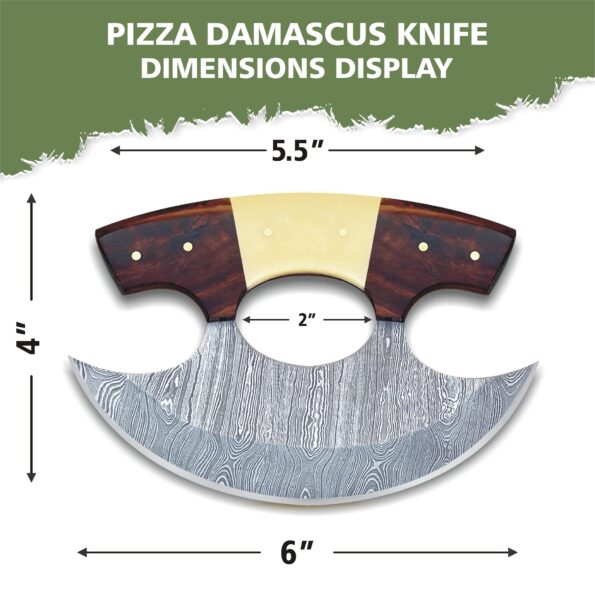
| Pizza ulu / rocker | Wide, gently curved blade | Pizza and flatbreads |
| Mini ulu | Small blade, sometimes with extras like a bottle opener | Small tasks, gifts |
How to Use an Alaskan Ulu Knife
- Grip the handle from above with your whole hand.
- Place the curve on a wooden or plastic board with the middle of the edge touching first.
- Rock from tip to tip with steady, light pressure, keeping the edge on the board.
- Turn your angle every few rocks for an even cut.
- Scoop chopped food with the blade face and carry it to your bowl or pan.
Avoid glass, stone and metal surfaces, which dull the edge quickly. Our cutting board guide explains which boards suit a rocking blade.
Caring for an Alaskan Ulu
- Hand wash with warm water and mild soap. Never use the dishwasher.
- Dry the blade and handle right away.
- Oil steel blades lightly now and then, especially Damascus or carbon steel.
- Oil natural handles like wood or bone occasionally to keep them from drying out.
- Store the ulu in its sheath or on its stand, away from moisture.
Ulu Designs Across the Arctic
One of the most interesting things about the ulu is how much it varies. Across the huge Arctic region, communities developed their own versions to suit local needs and materials. Some ulus have a handle attached by a single central stem, while others have a handle that runs along most of the blade’s top edge. Blade shapes range from wide, shallow crescents to narrower, deeper curves.
Handle shapes vary too. Some are simple bars, others are carved to fit the hand closely or decorated with designs. Size also changed with purpose: tiny ulus for delicate work, mid-size ulus for everyday cooking and larger ulus for heavy cutting. This variety is a reminder that the ulu is not a single design but a family of tools refined by many generations of skilled makers.
How to Choose an Alaskan Ulu Knife Today
If you are buying an Alaskan-style ulu for your kitchen, these points matter most.
Blade Steel
Stainless steel is the easiest to look after. Damascus steel adds a one-of-a-kind layered pattern and a keen edge but needs drying and a little oil. Read our comparison of stainless steel vs Damascus ulu knives for the full picture.
Blade Size
A blade of about 5 to 6 inches suits most kitchen jobs. Choose larger for pizza and big batches, smaller for herbs and garlic. Our ulu blade guide explains sizes and shapes in detail.
Handle Material
Wood and bone handles echo traditional materials and feel warm in the hand. Resin adds color and moisture resistance. Whatever the material, the handle should sit firmly on the blade with no wobble.
Sheath or Stand
A sheath protects the edge in a drawer and makes the ulu easy to take on trips. A stand or bowl lets you display it on the counter. Many ulus come with one or the other.
Clear Product Information
A good listing tells you the blade material, size, handle material and whether the ulu is Alaska Native-made or Alaskan-style. If any of this is missing, ask the seller before you buy.
Buying With Respect
The ulu is part of the living culture of Alaska Native peoples, so it is worth buying thoughtfully:
- Read descriptions carefully. Terms like “Native-made” or “made in Alaska” should be backed by clear details about the maker.
- Support artists directly when you want a traditional piece. Native-owned shops, cultural centers and art markets are great places to start.
- Enjoy kitchen ulus for what they are. An Alaskan-style kitchen ulu is a practical cooking tool inspired by the design — a great way to bring the rocking blade into your daily cooking.
The Ulu as a Gift
Ulus have long been given as meaningful gifts, and they still make memorable presents today. A kitchen ulu suits home cooks, pizza lovers, people who enjoy well-made tools, and anyone setting up a new kitchen. It is useful, a little unusual and comes with a great story.
When giving an ulu, consider including a short card about its Arctic origins and a note on how to care for it. Paired with a wooden cutting board, it becomes a complete gift that will be used for years.
Ulu vs Everyday Kitchen Knives
| Task | Ulu | Chef’s Knife | Pizza Wheel |
|---|---|---|---|
| Mincing herbs | Excellent | Good | Not suitable |
| Dicing vegetables | Very good | Excellent | Not suitable |
| Slicing pizza | Excellent | Fair | Good |
| Long, precise slices | Fair | Excellent | Not suitable |
| Wrist comfort | Excellent | Good | Good |
The ulu shines at anything that benefits from rocking. Keep a chef’s knife for long, precise slicing, and let the ulu take over herbs, vegetables, pizza and quick prep.
Our Alaskan-Style Ulu Picks
Every Huntlux ulu is an Alaskan-style kitchen ulu with a handmade Damascus steel blade and a leather sheath.
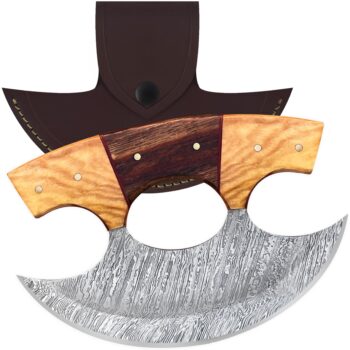
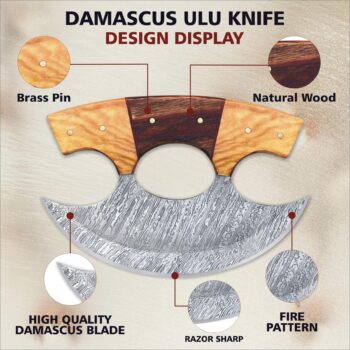
Light and Dark Wood Ulu
A Damascus ulu with a light and dark wood handle that echoes the natural materials of traditional ulus. A warm, versatile everyday rocker.
- Alaskan-Style Ulu Knife – 6″ Damascus Steel Rocking Chopper with Sheath, Light & Dark Wood Handle Original price was: $54.95.$29.99Current price is: $29.99.
- Alaskan-style ulu knife with a 6″ Damascus steel rocking blade
- Two-tone light & dark wood handle
- Chops herbs, slices pizza, preps veggies – with a leather sheath
BUY 2 ULU KNIVES, SAVE 15% – mix any styles, discount applies in cart.✈Free US Shipping
On orders $49+, otherwise $7.99↺14-Day Returns
Unused, with sheath & packaging✓Leather Sheath Included
Safe storage for the blade✉Questions?
Contact us – we reply fast
Buy 2 ulu knives, save 15%.
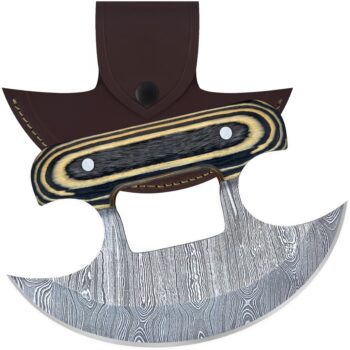
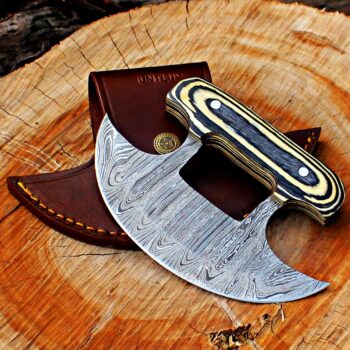
Multicolor Wood Ulu
A 6-inch Damascus ulu with a multicolor wood handle — a striking take on the classic shape for herbs, vegetables and pizza.
- Ulu Knife with Leather Sheath – 6″ Damascus Steel Kitchen Chopper, Multicolor Wood Handle Original price was: $54.95.$32.70Current price is: $32.70.
- Ulu knife with leather sheath and a 6″ Damascus steel blade
- Colorful multicolor wood handle – no two are alike
- Made for pizza night, herbs and everyday meal prep
BUY 2 ULU KNIVES, SAVE 15% – mix any styles, discount applies in cart.✈Free US Shipping
On orders $49+, otherwise $7.99↺14-Day Returns
Unused, with sheath & packaging✓Leather Sheath Included
Safe storage for the blade✉Questions?
Contact us – we reply fast
Buy 2 ulu knives, save 15%.
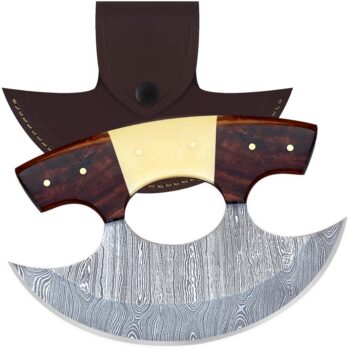
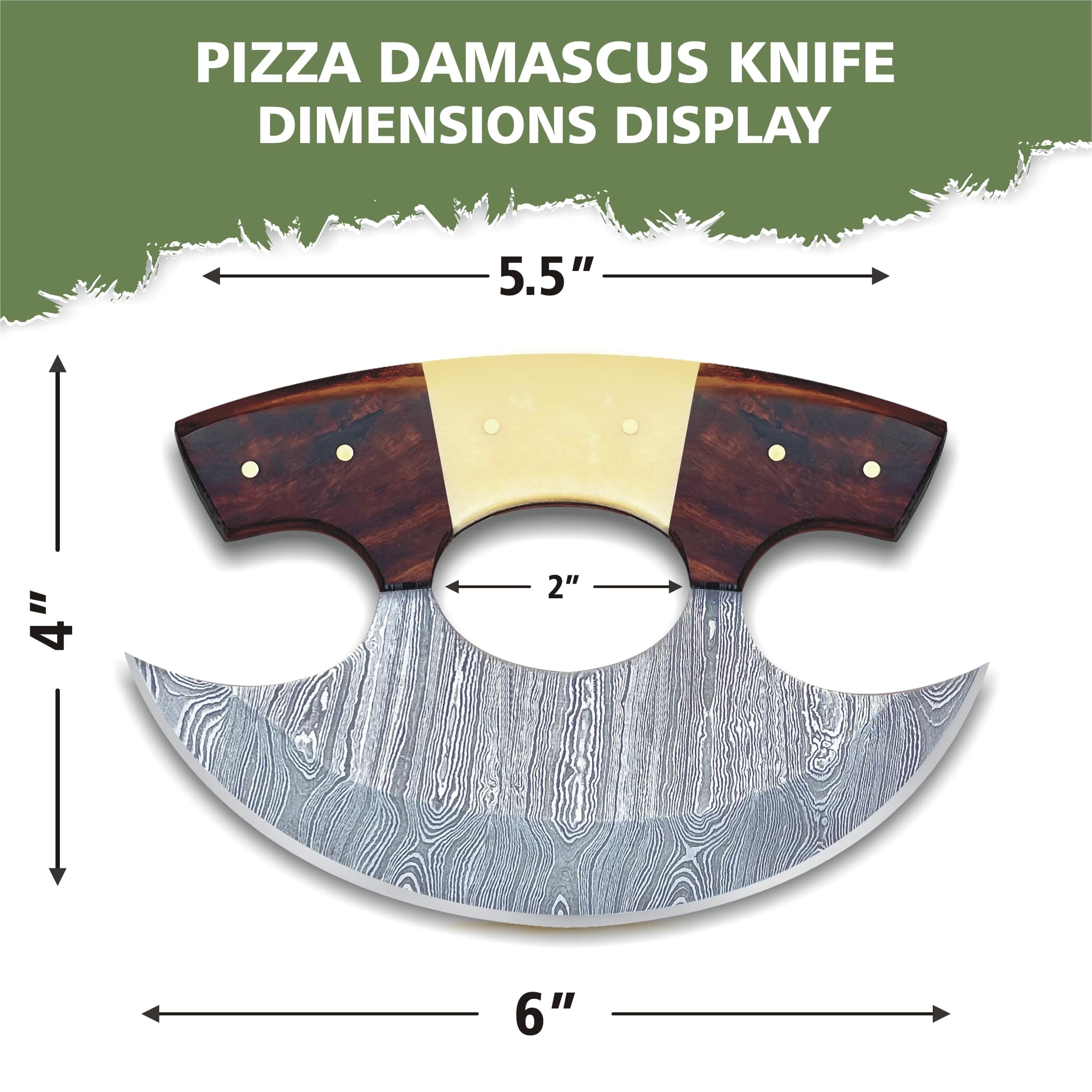
Camel Bone and Wood Ulu
A 6-inch Damascus ulu with a camel bone and wood handle, inspired by traditional bone handles. Our most gift-ready piece.
- Damascus Ulu Knife with Sheath – 6″ Alaskan-Style Kitchen Chopper, Camel Bone & Wood Handle Original price was: $59.95.$29.99Current price is: $29.99.
- 6″ Damascus steel ulu blade with a natural camel bone & wood handle
- Rocking cut for pizza, herbs, vegetables and cooked meat
- Comes with a leather sheath – ready to gift
BUY 2 ULU KNIVES, SAVE 15% – mix any styles, discount applies in cart.✈Free US Shipping
On orders $49+, otherwise $7.99↺14-Day Returns
Unused, with sheath & packaging✓Leather Sheath Included
Safe storage for the blade✉Questions?
Contact us – we reply fast
Buy 2 ulu knives, save 15%.
See every style in the ulu knife collection, or read our buyer’s guide to choose the right one.
Quick Facts About the Ulu
- Pronunciation: ulu is usually said “OO-loo.”
- One hand is enough: the centered handle makes it easy to use with either hand, so it suits left- and right-handed cooks alike.
- Many sizes, one idea: from tiny ulus for fine work to large ones for heavy cutting, the rocking principle stays the same.
- A blade and a scoop: the wide face carries food from board to pan, saving a step.
- A favorite keepsake: ulus are among the most popular gifts and souvenirs connected with Alaska.
Whether you value it for its history or its everyday usefulness, the ulu is a tool that rewards anyone who picks it up.
Seeing Traditional Ulus Up Close
If you travel to Alaska, museums and cultural centers are wonderful places to see traditional ulus and learn about the people who made them. Displays often show how blade shapes, handle materials and decorations vary between regions and generations. Seeing these pieces in person is the best way to appreciate the skill behind a tool that looks so simple.
Frequently Asked Questions
Still have a question? Contact us — we’re happy to help.
A Timeless Tool for Every Kitchen
The Alaska ulu has served Arctic families for thousands of years, and its simple, brilliant design still works beautifully today. Whether you collect a traditional ulu from an Alaska Native artist or use an Alaskan-style ulu at your kitchen counter, you are using one of the most practical knife shapes ever created.
Ready to bring one home? Explore handmade Damascus Alaskan-style ulu knives at Huntlux. Every ulu ships with a leather sheath, US orders over $49 ship free, and buying two saves you 15%.
ABOUT THE AUTHOR
The Huntlux Team
We make and sell handmade Damascus steel ulu knives, each shipped with a leather sheath, and personalized chef knife sets made to order. Our guides come from what we see every day: the questions customers ask before they buy, and how they actually use their ulus for herbs, pizza and everyday meal prep. Huntlux ulu knives are sold here on huntluxstore.com and on Amazon.
Shop this guide: 6″ Damascus ulu knife with sheath