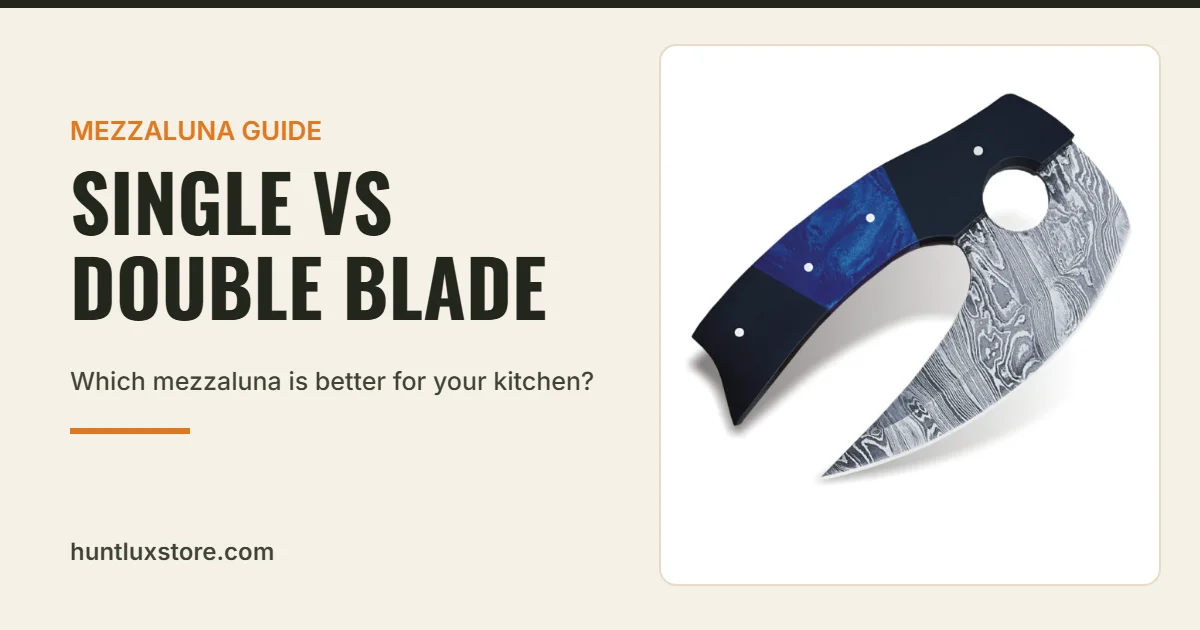
Single vs Double Mezzaluna: Which Is Better?
A single blade mezzaluna is better for most home cooks: it is versatile, easy to clean and easy to sharpen, and it handles herbs, vegetables, cheese and even pizza. A double mezzaluna cuts twice with every rock, so it is faster for big batches of finely minced herbs, but food gets trapped between the blades and it is less useful for other jobs.
In this guide we look closely at both styles, compare them across every factor that matters — speed, versatility, cleaning, sharpening, storage and safety — and help you decide which mezzaluna belongs in your kitchen. We also cover stainless steel and Damascus blade options and the boards that work best with each.
What Is a Single Blade Mezzaluna?
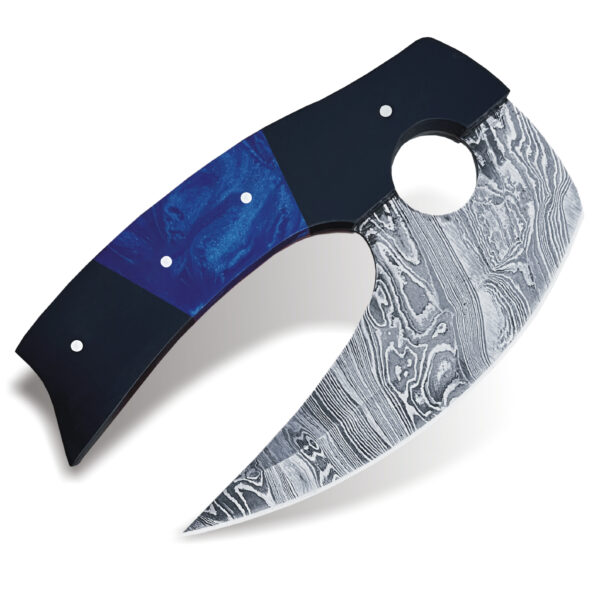
A single blade mezzaluna has one curved, half-moon blade. It may have a handle at each end, a single handle across the top, or an ulu-style handle centered over the blade. You rock it across the cutting board, and the curved edge cuts with each pass.
Because there is only one edge, the single blade is simple in every way: it is light, it is easy to clean, it sharpens quickly on a honing rod and it can handle a wide range of foods. That simplicity is exactly why it is the most popular style.
What a Single Blade Does Well
- Mincing herbs, garlic and shallots
- Dicing onions, peppers and other vegetables
- Chopping nuts and dried fruit
- Slicing pizza, flatbreads and quesadillas
- Cutting cheese and cooked meat
- Making chopped salads right on the board
What Is a Double Mezzaluna?
A double mezzaluna has two curved blades set side by side, a small distance apart, joined to the same handles. Every rock makes two cuts at once, so herbs are minced in roughly half the number of passes.
The double design is a specialist tool. It excels at turning a large mound of parsley, basil or cilantro into a fine, even mince in seconds. Outside of that job, the second blade gets in the way: it does not slice pizza or cheese neatly, and soft food can pack into the gap between the blades.
What a Double Blade Does Well
- Large batches of finely minced herbs
- Very fine garlic and shallot mince
- Herb mixes for pesto, salsa verde and gremolata
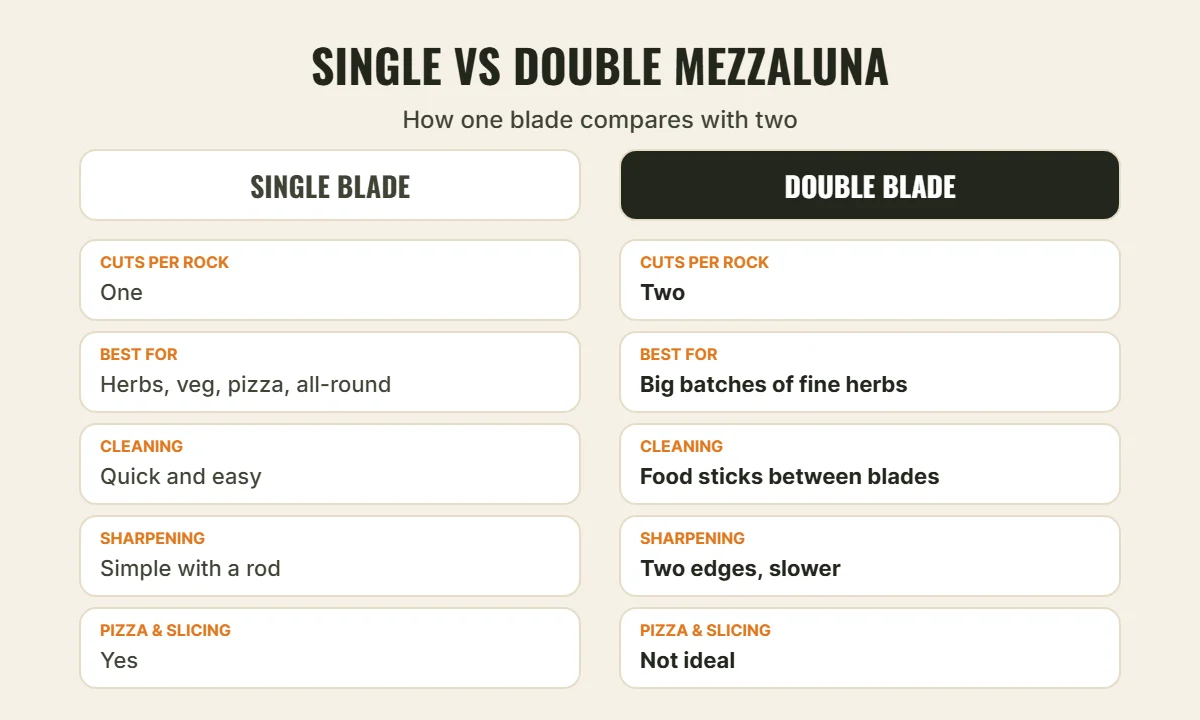
Single Blade vs Double Mezzaluna: Full Comparison
| Factor | Single Blade Mezzaluna | Double Mezzaluna |
|---|---|---|
| Cuts per rock | One | Two |
| Speed on herbs | Fast | Very fast |
| Versatility | High — herbs, vegetables, cheese, pizza | Low — mostly herbs and garlic |
| Pizza and slicing | Excellent with a wide blade | Poor |
| Cleaning | Quick — one flat blade | Slower — food lodges between blades |
| Sharpening | One edge, simple | Two edges, more time |
| Weight | Lighter | Heavier |
| Storage | Compact, fits a sheath | Bulkier |
| Best for | Most home cooks | Herb-heavy cooks who mince in bulk |
Speed: Does a Double Blade Really Cut Faster?
Yes — for herbs. With two edges, each rock makes twice as many cuts, so you reach a fine mince sooner. If you regularly mince big bunches of herbs for sauces, that saves real time.
For everything else, the speed advantage disappears. Dicing vegetables, slicing pizza and cutting cheese call for one clean edge, not two. And with a sharp single blade and a good rocking rhythm, most home cooks find the difference on herbs is only a few extra passes.
Versatility: Where the Single Blade Wins
A single blade mezzaluna is closer to an all-purpose knife. It can take on almost any chopping job and switch from herbs to pizza without a second thought. That versatility is why many cooks find a single blade earns its place in the drawer, while a double blade comes out only on herb day.
If you want one rocking blade that does nearly everything, a single blade — or a single-blade ulu — is the answer. Learn more about the ulu and mezzaluna families in our guide to ulu vs mezzaluna.
Cleaning and Maintenance
Single Blade
Wash with warm water and mild soap, rinse and dry with a towel. It takes seconds. A single flat blade has nowhere for food to hide.
Double Blade
Herbs, garlic and onion juice tend to pack into the gap between the two blades. Rinse it right after use and run a small brush between the blades before anything dries. Dry both blades and the space between them carefully so no moisture is left behind.
Neither style belongs in the dishwasher. Heat, detergent and rattling dull the edge and can damage handles.
Sharpening Single and Double Blades
A curved edge sharpens best on a honing rod or a round stone: roll the blade along the rod from tip to tip, following the curve. With a single blade, that takes a minute. With a double blade, you sharpen each edge separately, and the second blade can get in the way of the rod, so it takes longer and needs more care. Our ulu knife guide explains the sharpening steps.
Stainless Steel Mezzaluna vs Damascus
Both single and double mezzalunas come in different steels. The two most common choices are:
- Stainless steel mezzaluna: resists rust and needs very little care — wash, dry and store. A good low-maintenance choice, especially for double blades, which are harder to dry fully.
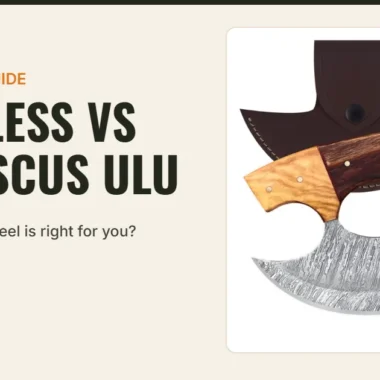
- Damascus mezzaluna: layered steel with a one-of-a-kind pattern and a keen edge. It needs drying and occasional oiling, which is easiest on a single blade.
For a full comparison, read stainless steel vs Damascus ulu knife.
Handle Styles: Two Handles or One?
Separate from the number of blades, mezzalunas differ in their handles:
- Two handles (one at each end): the classic Italian design. Both hands rock the blade in a seesaw motion, and both stay well away from the edge.
- Single top handle: one handle runs across the top of the blade. You rock with one hand and can steady the board with the other.
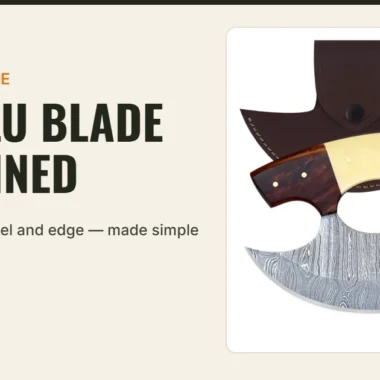
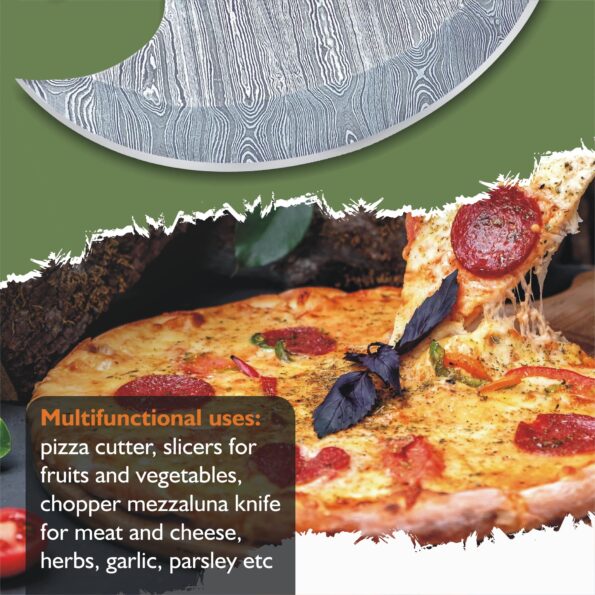
- Ulu-style handle: a single handle centered over the blade, often with openings in the blade for your fingers. This gives a very direct, controlled rock and compact storage.
Single blades are available with all three handle styles. Double blades almost always use two handles.
Which Board Works Best?
A thick hardwood board suits both styles. Double mezzalunas are often paired with a bowl board that keeps herbs in one place. Single blades work equally well on a flat board — which also lets you slice pizza — or a bowl board for herbs. See our mezzaluna cutting board guide for sizes and materials.
How to Use a Mezzaluna (Single or Double)
- Stabilize the board with a damp towel underneath.
- Gather the food into a loose pile in the center.
- Grip the handle or handles firmly.
- Rock the blade from one end to the other, keeping the edge on the board.
- Turn your angle by about 90 degrees every few rocks.
- Gather and repeat until the food is as fine as you like.
Why Double Mezzalunas Exist
The double mezzaluna was created for one job: mincing large amounts of herbs as fast as possible. In kitchens that prepare herb sauces and garnishes every day, cutting the number of passes in half saves real time. That focus is its strength and its limit. It is designed around herbs, so it gives up the all-round usefulness of a single blade.
Real-Kitchen Scenarios
Weeknight Dinner
You need a handful of chopped parsley, two cloves of garlic and a diced onion. A single blade handles all three on one board in a couple of minutes, and cleanup is a quick rinse. A double blade would mince the herbs a little faster but struggle with the onion and take longer to clean.
Pesto Day
You are turning three big bunches of basil into pesto. Here the double mezzaluna shines, reducing the pile to a fine mince quickly. A sharp single blade gets there too, with a few more rocks.
Pizza Night
A single wide blade slices through the pie in clean, rocking passes. A double blade is the wrong tool — it leaves narrow strips and drags toppings. See our mezzaluna pizza cutter guide for the best technique.
Holiday Cooking
Stuffing herbs, chopped nuts, diced vegetables and garnishes all need prep. A single blade moves from task to task without fuss, which is exactly what you want on a busy day.
Common Mistakes When Choosing a Mezzaluna
- Buying a double blade for everything: it is a herb specialist, not an all-rounder.
- Ignoring cleaning: if you dislike fiddly washing, a double blade will frustrate you.
- Choosing a blade that is too small: a tiny blade means many extra passes on a full pile or pizza.
- Skipping a sheath or guard: curved blades need protection in a drawer.
- Pairing with a hard board: glass and stone dull the edge quickly; use wood or plastic.
Mezzaluna Buying Checklist
- Blades: single for versatility, double for bulk herbs only.
- Size: about 5 to 6 inches for everyday use; larger for pizza.
- Steel: stainless for easy care, Damascus for character and a keen edge.
- Handle: two handles for a seesaw grip, or a single top or ulu-style handle for one-handed control.
- Protection: a sheath or blade guard included.
- Clear details: blade size, steel and handle material listed by the seller.
Who Should Buy Which?
| You are… | Best choice |
|---|---|
| A home cook who wants one rocking blade | Single blade |
| Making large herb sauces every week | Double blade (plus a single for everything else) |
| A pizza lover | Wide single blade or pizza rocker |
| Short on time for cleanup | Single blade |
| Buying a gift | Single-blade Damascus mezzaluna or ulu |
Tips for Getting the Most From Any Mezzaluna
- Dry herbs completely before chopping so they stay fluffy and do not stick.
- Strip herb leaves from woody stems first.
- Crush garlic lightly with the flat of the blade before rocking.
- Rock with light, steady pressure and let the curve do the work.
- Wipe the blade between ingredients to keep flavors separate.
Storing Your Mezzaluna Safely
A curved blade should never rattle loose in a drawer. Store a single blade in its sheath or a blade guard, or hang it on a magnetic strip away from the edge of the counter. Double mezzalunas are bulkier, so many cooks keep them on a hook or in a dedicated drawer slot with a guard. Whatever you choose, make sure the blade is completely dry before storing it, especially if it is Damascus or carbon steel.
How Long Does a Mezzaluna Last?
A well-made mezzaluna can last for many years. The main things that shorten its life are dishwashers, hard cutting surfaces and storing it wet. Hand wash it, dry it straight away, hone the edge every few months and keep it in a sheath, and a single blade in particular will serve you for a very long time. Natural handles such as wood or bone benefit from a light coat of oil now and then to keep them from drying out.
Single Blade Mezzaluna vs Ulu
A single-blade mezzaluna with an ulu-style handle is very close to an ulu. Both rock with one hand, both handle herbs and vegetables, and both can cut pizza. The ulu tends to have a wider crescent, while the mezzaluna-style blade is often slightly narrower and more curved for fine mincing. If you like the idea of a single blade, either one is a great choice.
The Bottom Line in One Sentence
If you only buy one mezzaluna, make it a sharp single blade with a comfortable handle and a sheath — it will chop herbs fast, handle the rest of your prep with ease and stay simple to care for.
Our Single-Blade Picks
We focus on single-blade designs because they are the most versatile and easiest to care for. Every Huntlux knife has a handmade Damascus steel blade and comes with a leather sheath.
Best Single-Blade Mezzaluna
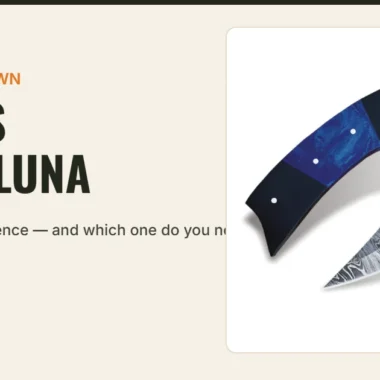
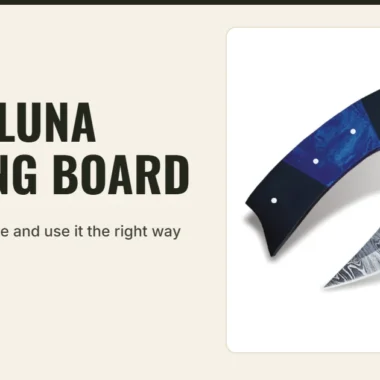
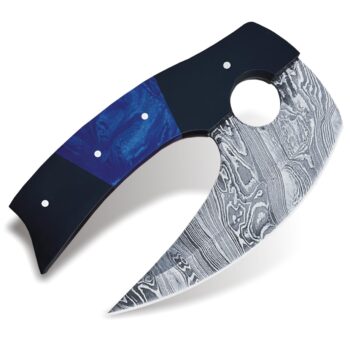
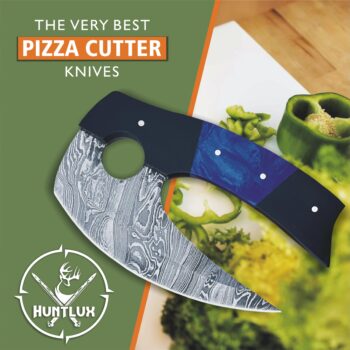
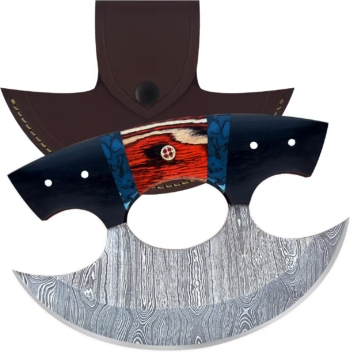
A 5.4-inch Damascus mezzaluna with a single top handle in blue-and-black resin. Nimble for herbs and garlic, comfortable for daily prep, and easy to clean and sharpen.
- Damascus Mezzaluna Ulu Knife – 5.4″ Rocking Herb Chopper with Sheath, Blue & Black Resin Handle Original price was: $64.50.$34.50Current price is: $34.50.
- Mezzaluna-style ulu knife with a 5.4″ Damascus steel blade
- Minces herbs, garlic and veggies fast with a rocking motion
- Blue & black resin handle with leather sheath
BUY 2 ULU KNIVES, SAVE 15% – mix any styles, discount applies in cart.✈Free US Shipping
On orders $49+, otherwise $7.99↺14-Day Returns
Unused, with sheath & packaging✓Leather Sheath Included
Safe storage for the blade✉Questions?
Contact us – we reply fast
Buy 2 ulu knives, save 15%.
Best for Pizza and Big Jobs
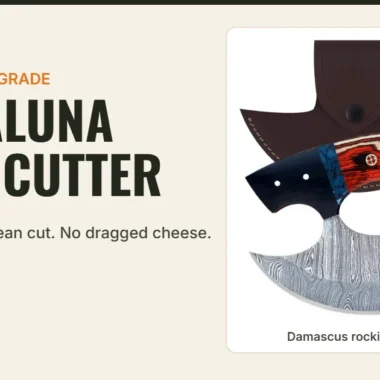
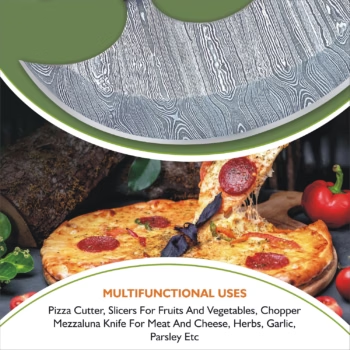
A wide Damascus rocking blade with a resin-and-wood handle — ideal for pizza, flatbreads and large batches of vegetables.
- Ulu Rocking Pizza Cutter – 6″ Damascus Steel Ulu Knife with Sheath, Resin & Wood Handle Original price was: $54.95.$32.70Current price is: $32.70.
- Rocking pizza cutter and ulu knife in one – 6″ Damascus steel blade
- Slices pizza in a single rocking motion, no dragged toppings
- Resin & wood handle with leather sheath
BUY 2 ULU KNIVES, SAVE 15% – mix any styles, discount applies in cart.✈Free US Shipping
On orders $49+, otherwise $7.99↺14-Day Returns
Unused, with sheath & packaging✓Leather Sheath Included
Safe storage for the blade✉Questions?
Contact us – we reply fast
Buy 2 ulu knives, save 15%.
Best Compact Option
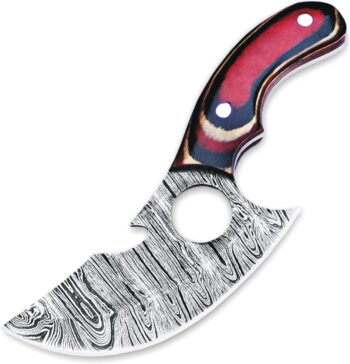
A 4.3-inch mini Damascus ulu with a bottle opener and red-and-black handle. Perfect for garlic, small herb jobs and quick tasks.
- Mini Ulu Knife with Bottle Opener – 4.3″ Damascus Steel Chopper with Sheath, Red & Black Handle Original price was: $49.99.$31.99Current price is: $31.99.
- Mini ulu knife with a 4.3″ Damascus steel blade
- Built-in bottle opener on the handle
- Red & black handle with leather sheath – great gift
BUY 2 ULU KNIVES, SAVE 15% – mix any styles, discount applies in cart.✈Free US Shipping
On orders $49+, otherwise $7.99↺14-Day Returns
Unused, with sheath & packaging✓Leather Sheath Included
Safe storage for the blade✉Questions?
Contact us – we reply fast10 in stock
Buy 2 ulu knives, save 15%.
Browse every size in the ulu knife collection.
Still deciding? Think about the last five meals you cooked. If most needed chopped herbs, onions, garlic or a sliced pizza, a single blade covers them all. If one of them was a giant batch of pesto, a double blade might be a fun extra — but the single blade is still the one you will reach for most often.
Frequently Asked Questions
Still have a question? Contact us — we’re happy to help.
The Verdict
For most kitchens, a single blade mezzaluna is the smarter buy. It minces herbs quickly, handles vegetables, cheese and pizza, cleans in seconds and sharpens easily. Choose a double mezzaluna only if you mince large batches of herbs often and do not mind the extra cleaning.
Ready to choose? Explore handmade Damascus single-blade mezzaluna and ulu knives at Huntlux. Every knife comes with a leather sheath, US orders over $49 ship free, and buying two saves you 15%.
ABOUT THE AUTHOR
The Huntlux Team
We make and sell handmade Damascus steel ulu knives, each shipped with a leather sheath, and personalized chef knife sets made to order. Our guides come from what we see every day: the questions customers ask before they buy, and how they actually use their ulus for herbs, pizza and everyday meal prep. Huntlux ulu knives are sold here on huntluxstore.com and on Amazon.
Shop this guide: mezzaluna ulu knife